
Helical antenna geometry — turns, pitch, wire diameter, and reflector spacing — directly determines center frequency, bandwidth, and polarization. This page documents real tuning experiments: prototypes designed, built, and verified on the nolle.engineering antenna test facility. Each variant shown here starts from a standard product and is modified for a specific use case.
IceConeFeed — QO100 Uplink Helix
The IceConeFeed v2.1 uplink helix is nominally optimized for 2400 MHz. By adjusting wire diameter and turn count, the geometry can be shifted for wider bandwidth or a different center frequency — useful when targeting specific transponder segments or operating conditions.
Broadband variant: 500 MHz bandwidth (2100–2500 MHz)
Increasing wire diameter and adjusting winding count widens the helix bandwidth significantly. This variant covers the full 2100–2500 MHz range, accommodating both the QO100 narrowband and DATV segments without retuning. Built and verified in both LHCP and RHCP.


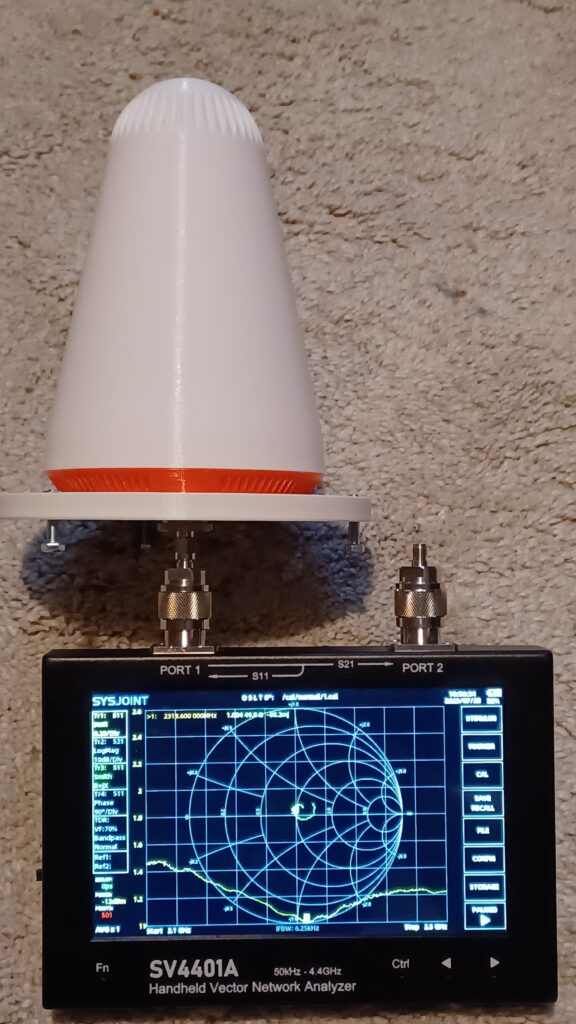
Frequency shift to 2491.75 MHz
The standard v2.1 center frequency sits at 2400 MHz. Shifting to 2491.75 MHz moves the optimum toward the upper QO100 transponder edge — relevant for stations using the wideband segment or requiring headroom above the standard uplink range. Achieved by reducing pitch and turn spacing on the helix winding.


→ IceConeFeed v2.1 in the shop
L-Band Helix Customization
L-Band helical antennas cover a wide frequency range (1.1–1.8 GHz) and multiple polarizations. The number of turns, helix diameter, and pitch set the center frequency; polarization is determined by winding direction. These experiments document a progression from broadband coverage to narrow-band mission-specific designs.
10-turn RHCP — broadband L-Band (1.4–1.7 GHz)
The 10-turn RHCP design delivers coverage across the full satellite L-Band allocation, making it effective for Inmarsat, Iridium, Globalstar, and meteorological satellites without retuning. Bandwidth exceeds 200 MHz. This prototype has since become a standard product.

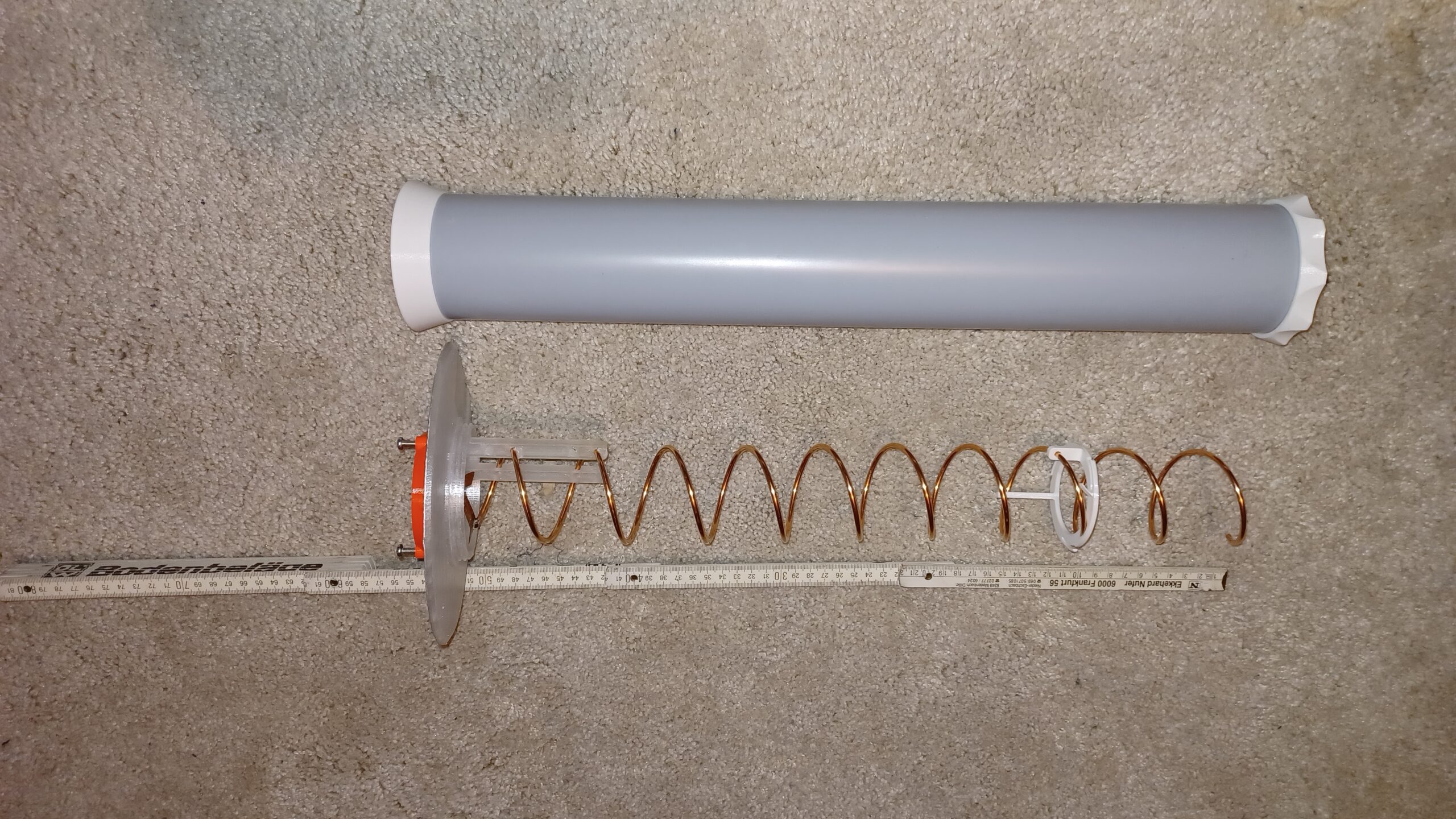


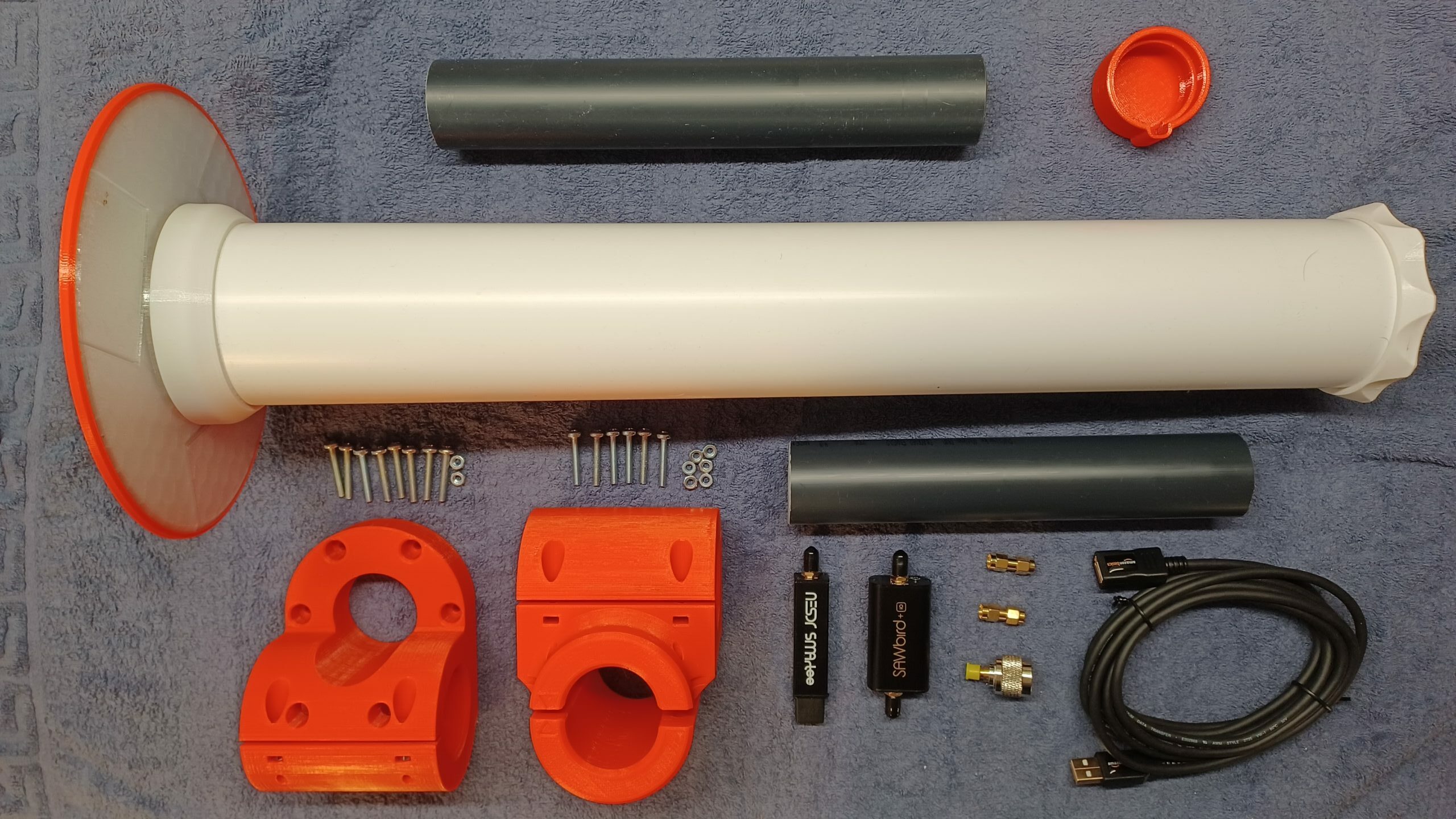
7-turn RHCP — 1440 MHz center / 500 MHz bandwidth
Reducing turn count shifts the center frequency downward. This 7-turn RHCP variant was tuned to a 1440 MHz center with 500 MHz bandwidth, spanning from GPS L2 at 1176 MHz to HRPT at 1707 MHz in a single aperture. A useful all-L-Band rover antenna for stations receiving across the full allocation.
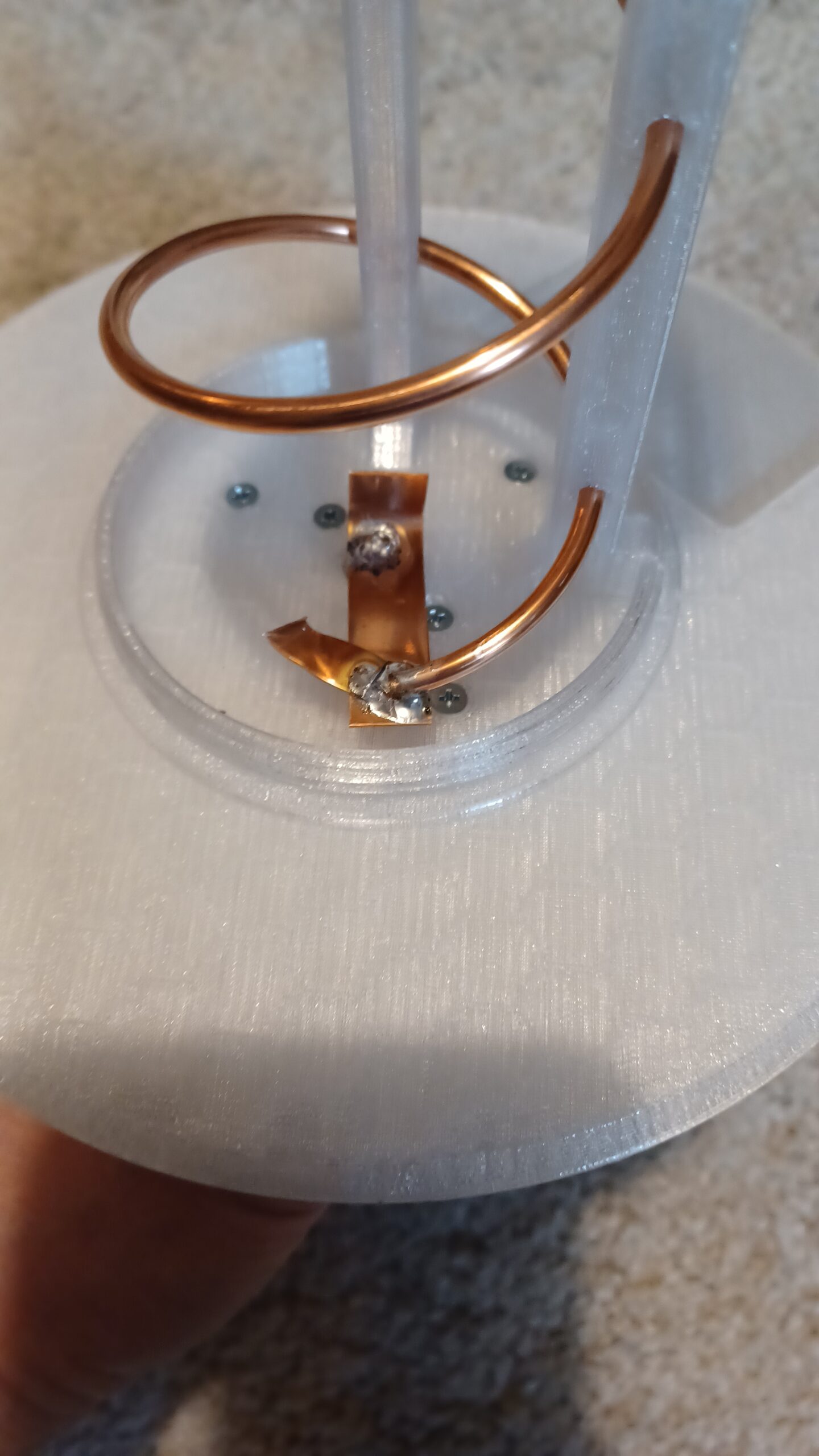


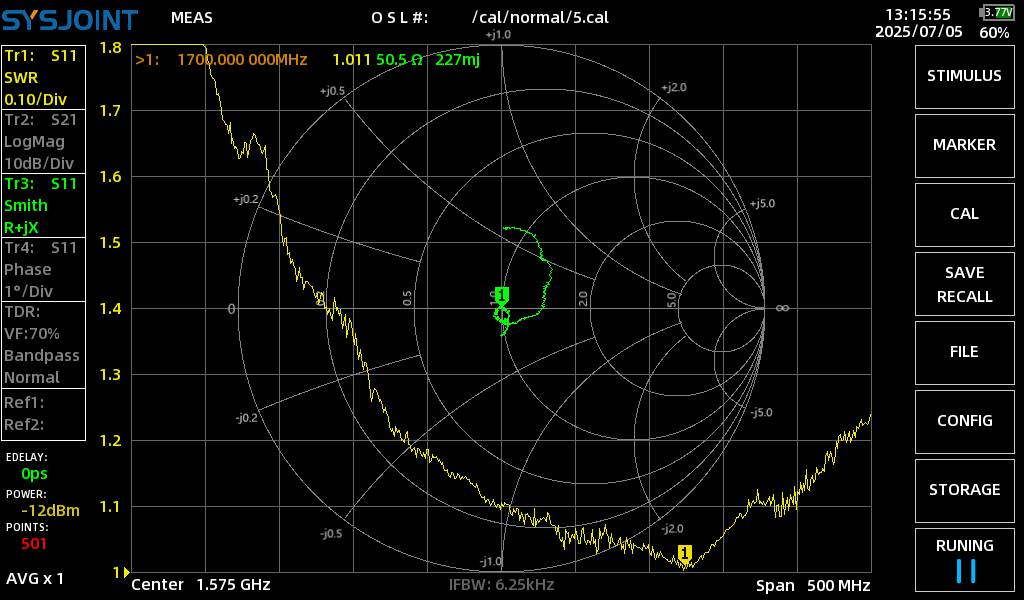
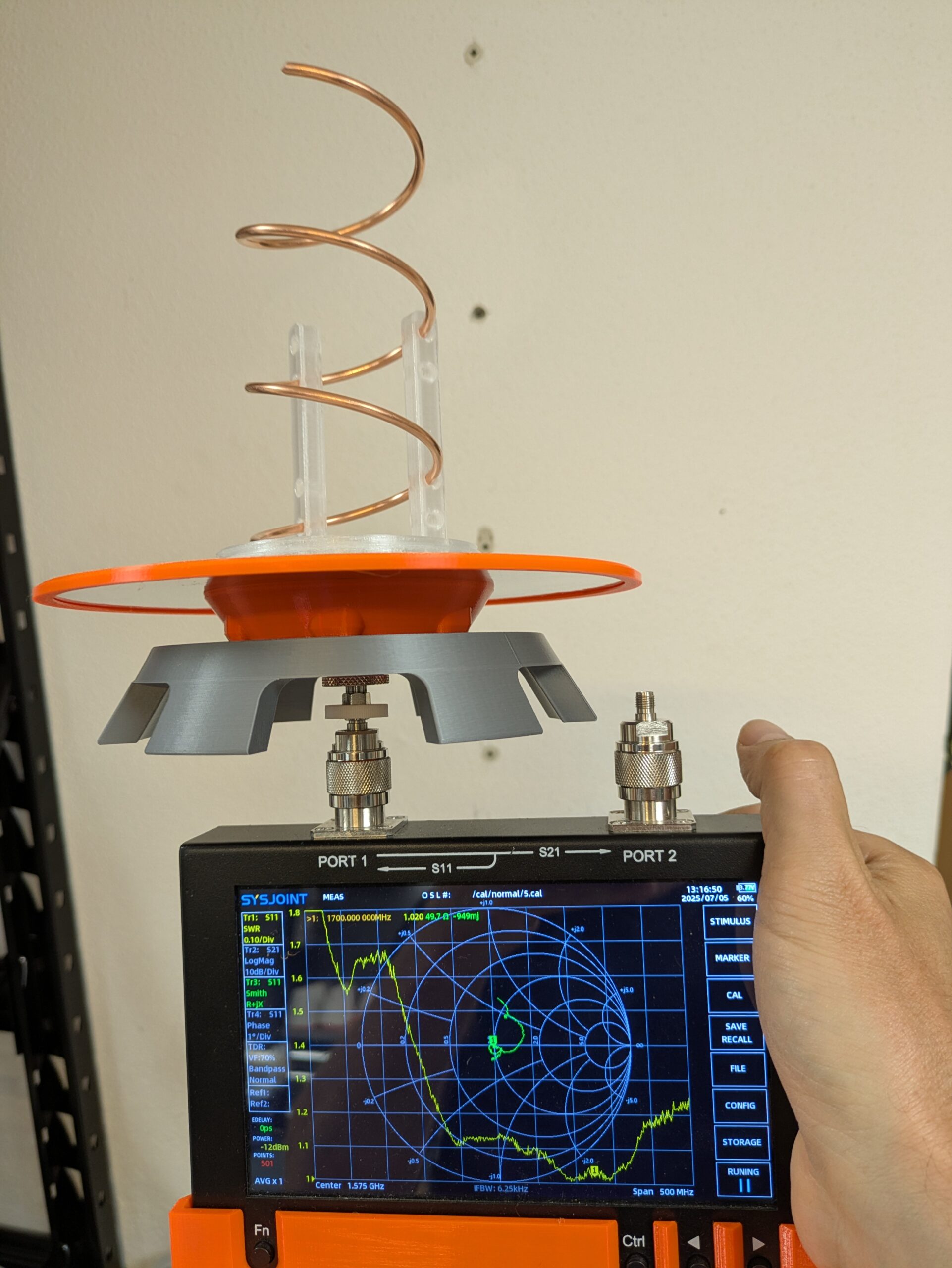
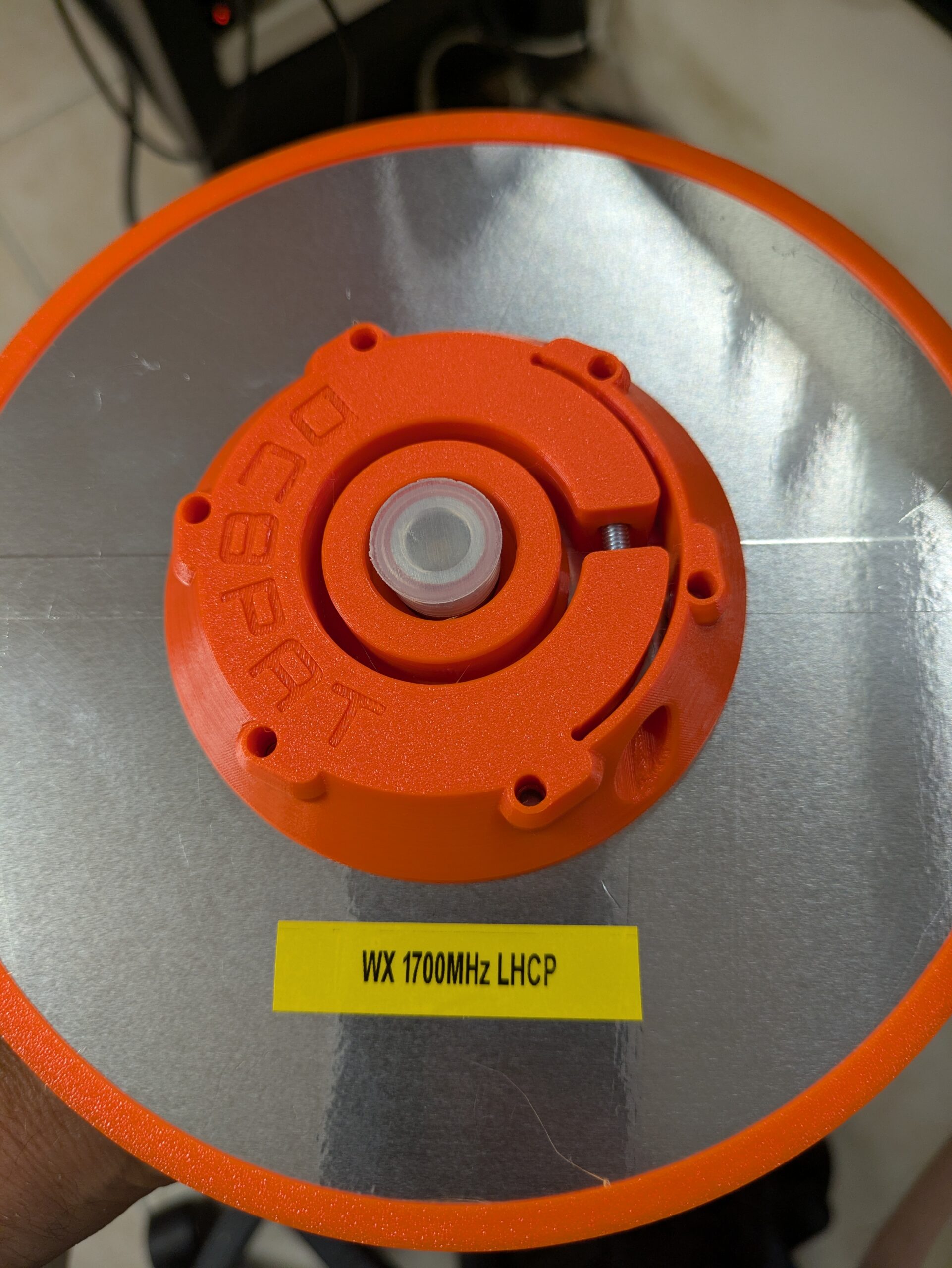
3-turn LHCP — WX HRPT (1694–1707 MHz)
Three turns produce a compact, narrow-bandwidth helix tuned to the 1.7 GHz weather satellite HRPT band. LHCP winding matches the circular polarization transmitted by polar-orbiting weather satellites (NOAA, Meteor-M, FengYun). A tight frequency target achieved with a minimal and lightweight structure.
→ Satellite L-Band Helix in the shop → WX HRPT Helix in the shop