
Amateur ground station DC8PAT (locator JN58ua) for the geostationary weather satellite Elektro-L No.3 (14.5° W), LRIT downlink at 1691 MHz. The station runs unattended: it decodes every transmission, logs the signal level and publishes the images on this page.
Live: band level and transmissions
Signal level in a 300 kHz window around the carrier, in dB over the median of the 2.4 MHz span, 10 s resolution. Dashed line: 4.4 dB, the steady level needed for a clean decode. The bar below the plot shows each transmission: green = all 30 image segments clean, orange = damaged segments, grey = precursor at xx:12 UTC, blue = next scheduled transmissions. The countdown runs to the expected start of the next transmission; day transmissions start 20–60 s after xx:42, night transmissions within a few seconds.
Live: waterfall
OpenWebRX on 1691.0 MHz, 2.4 MHz span. Between transmissions only noise and local interference lines are visible. If the frame does not load, open sdr.nolle.engineering directly.
Images of the last 24 hours
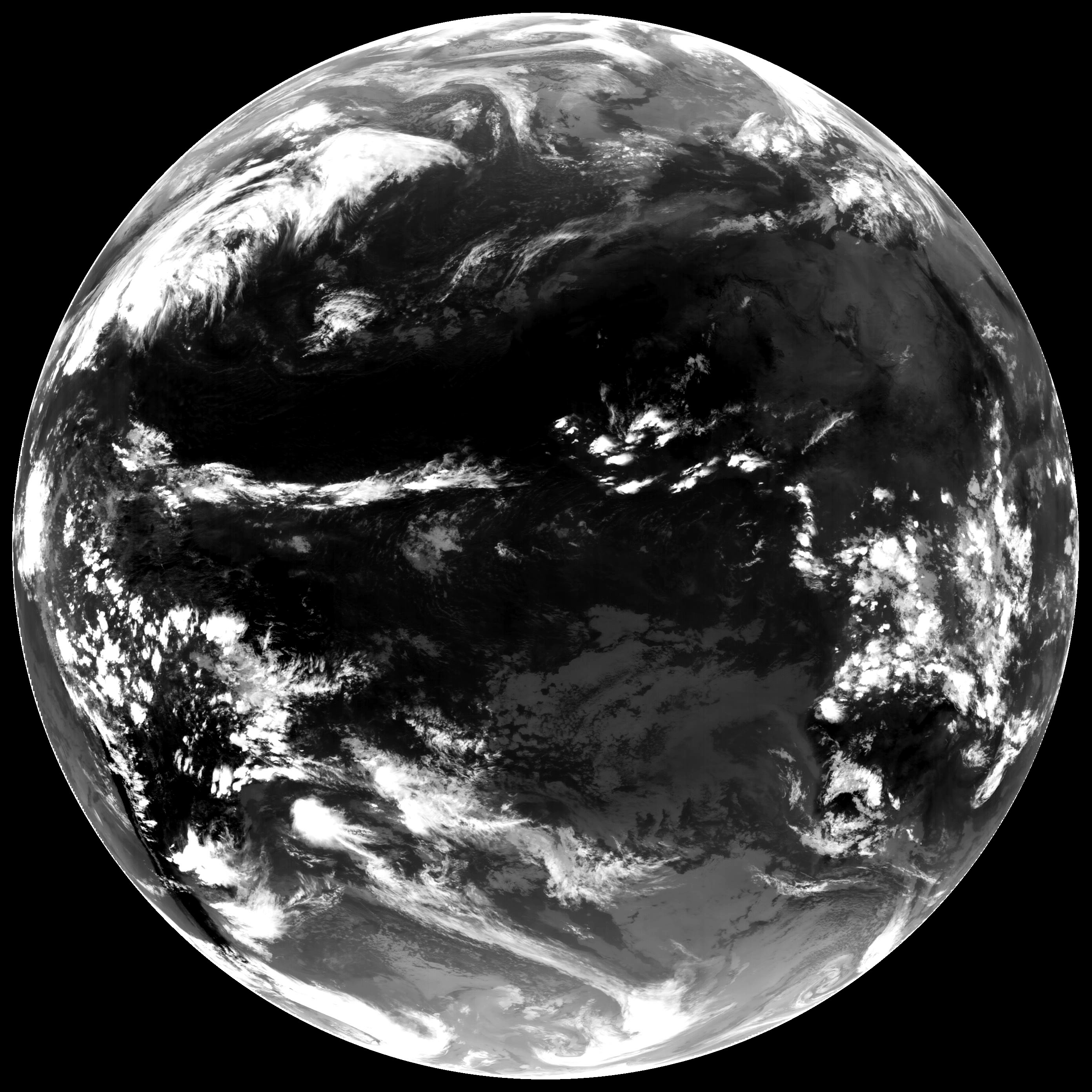
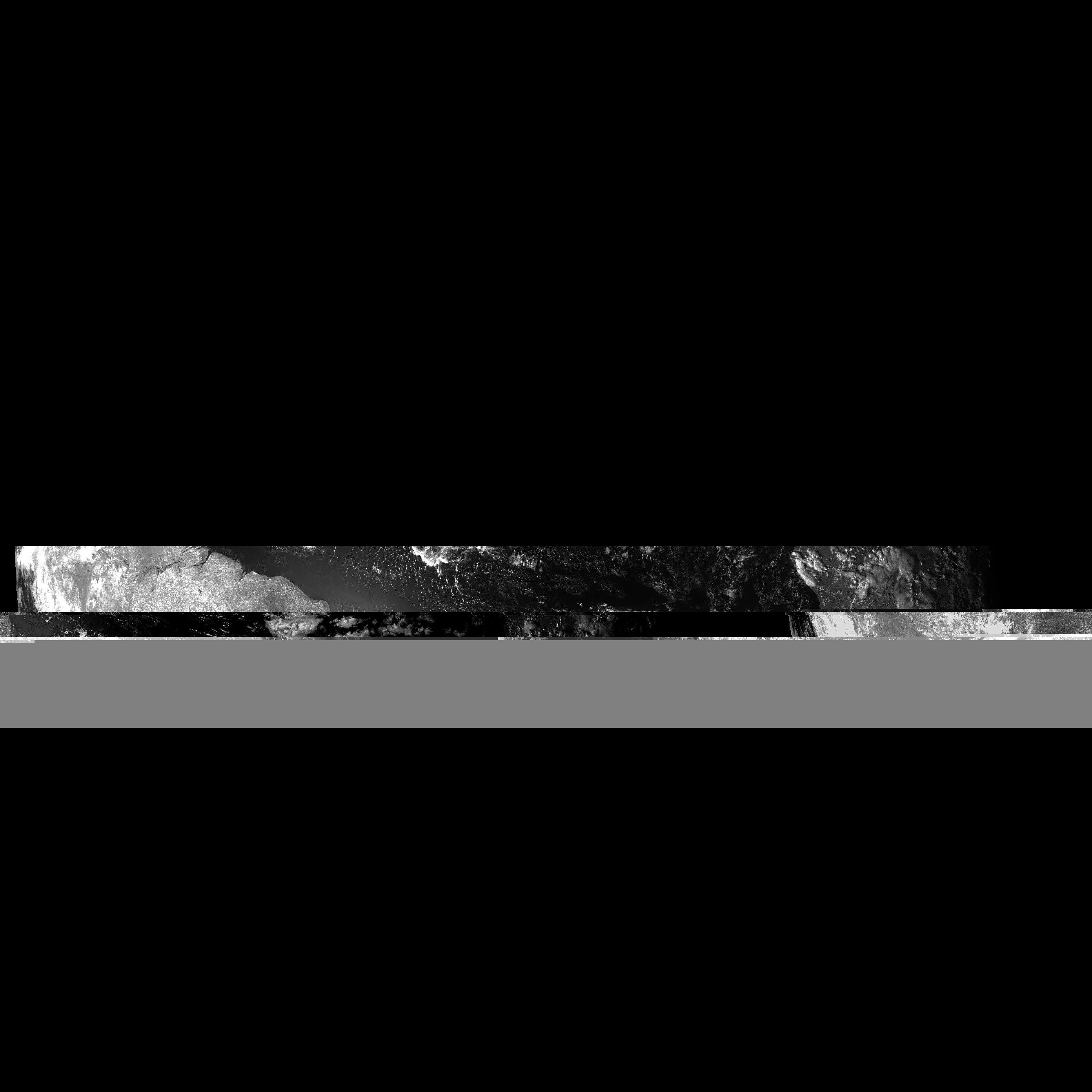
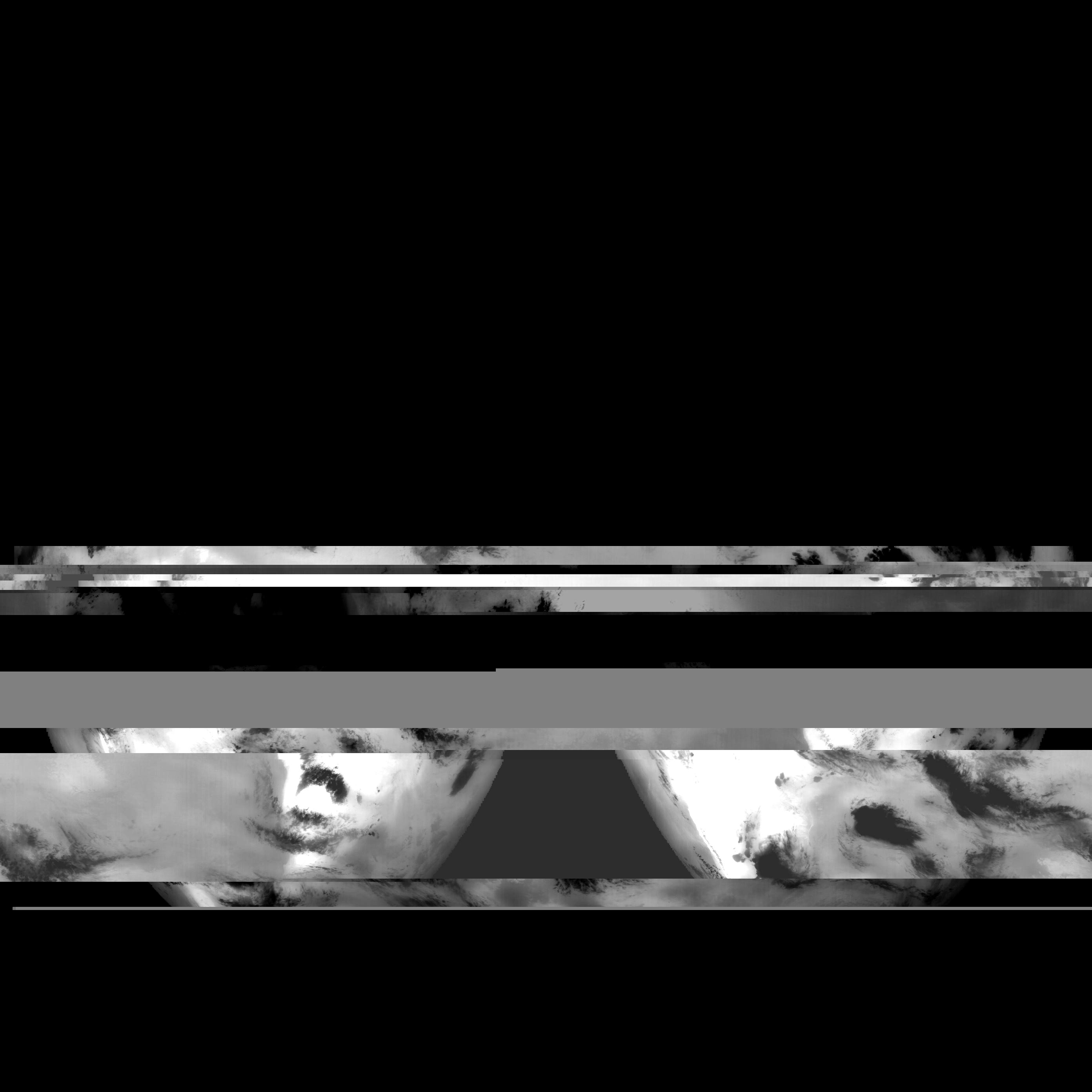
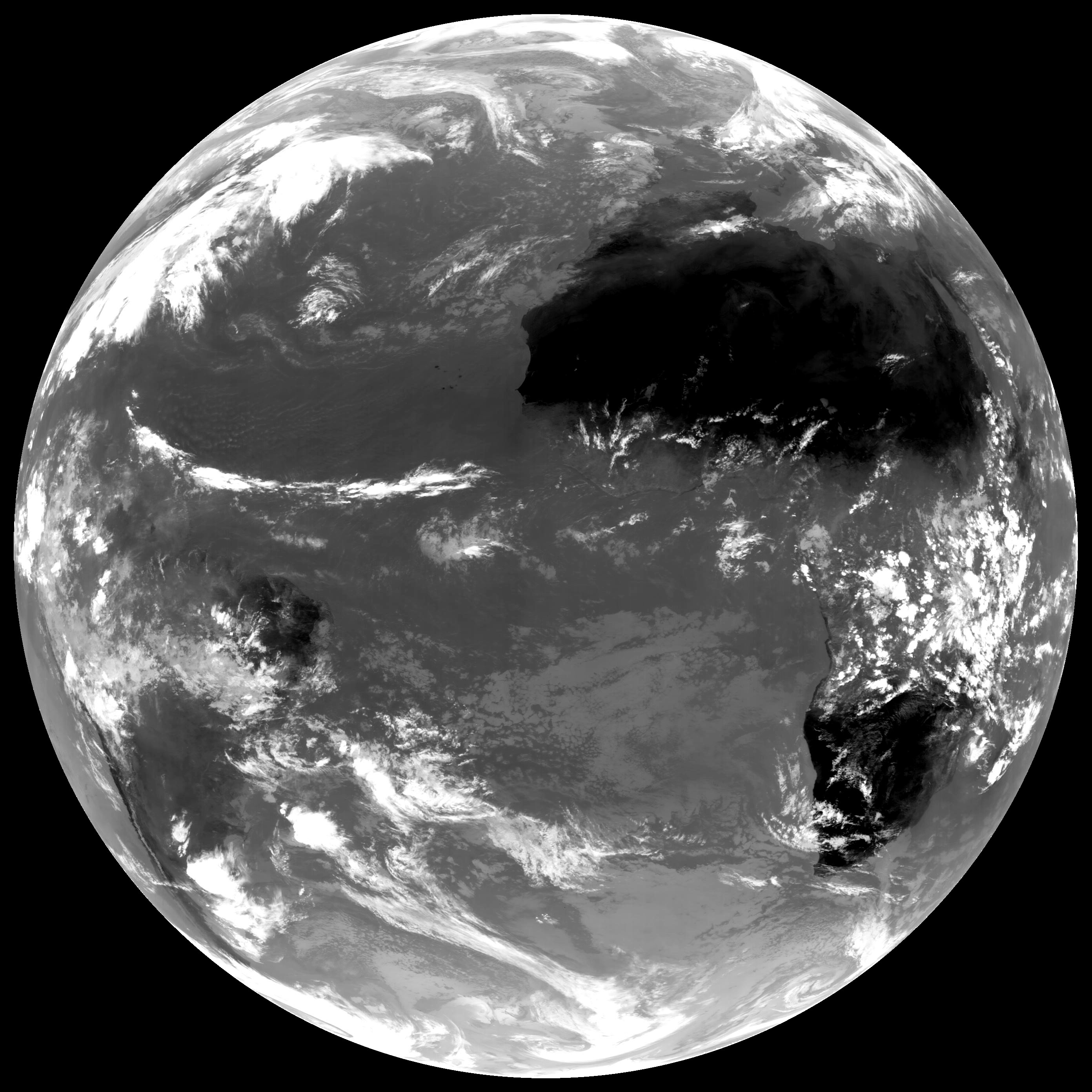
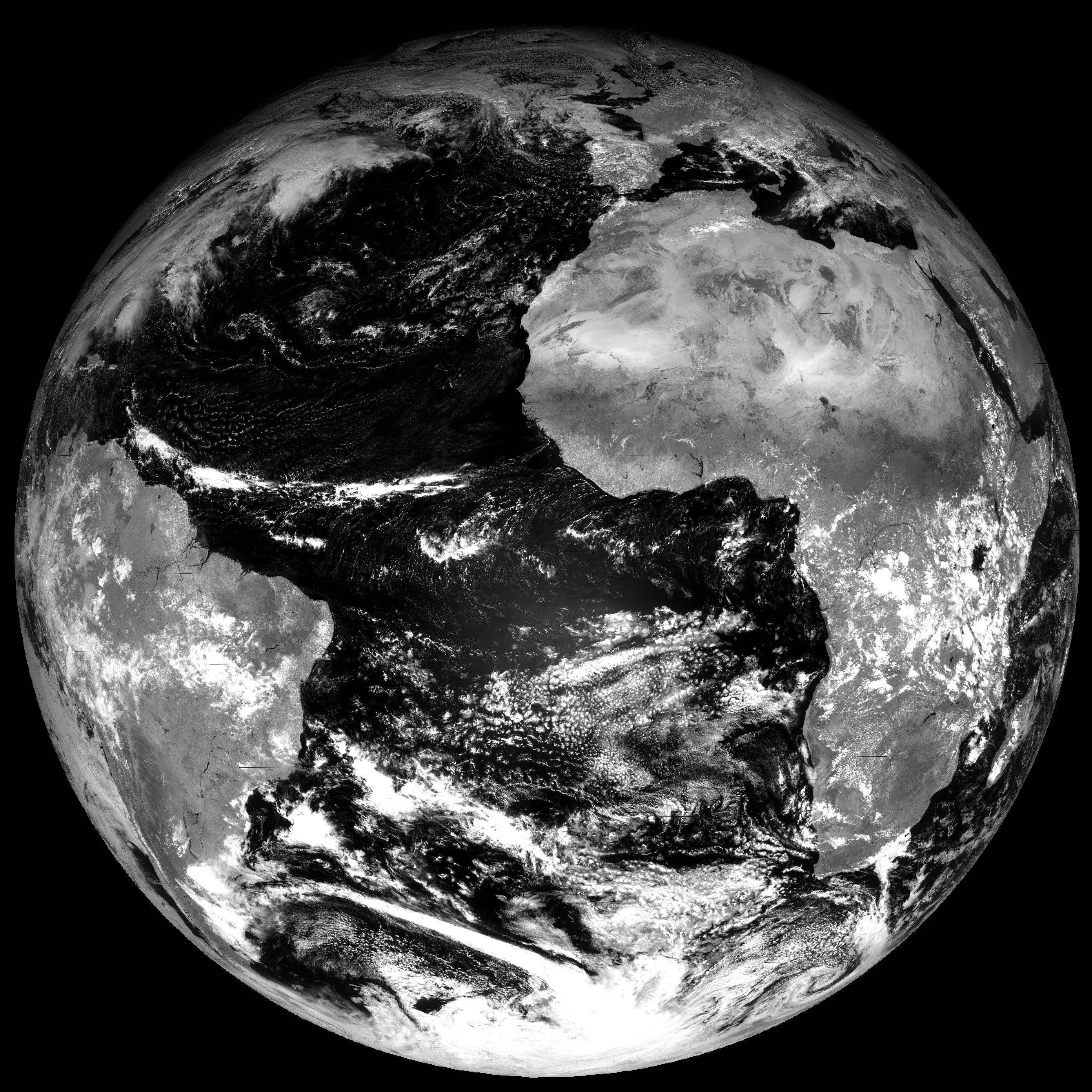
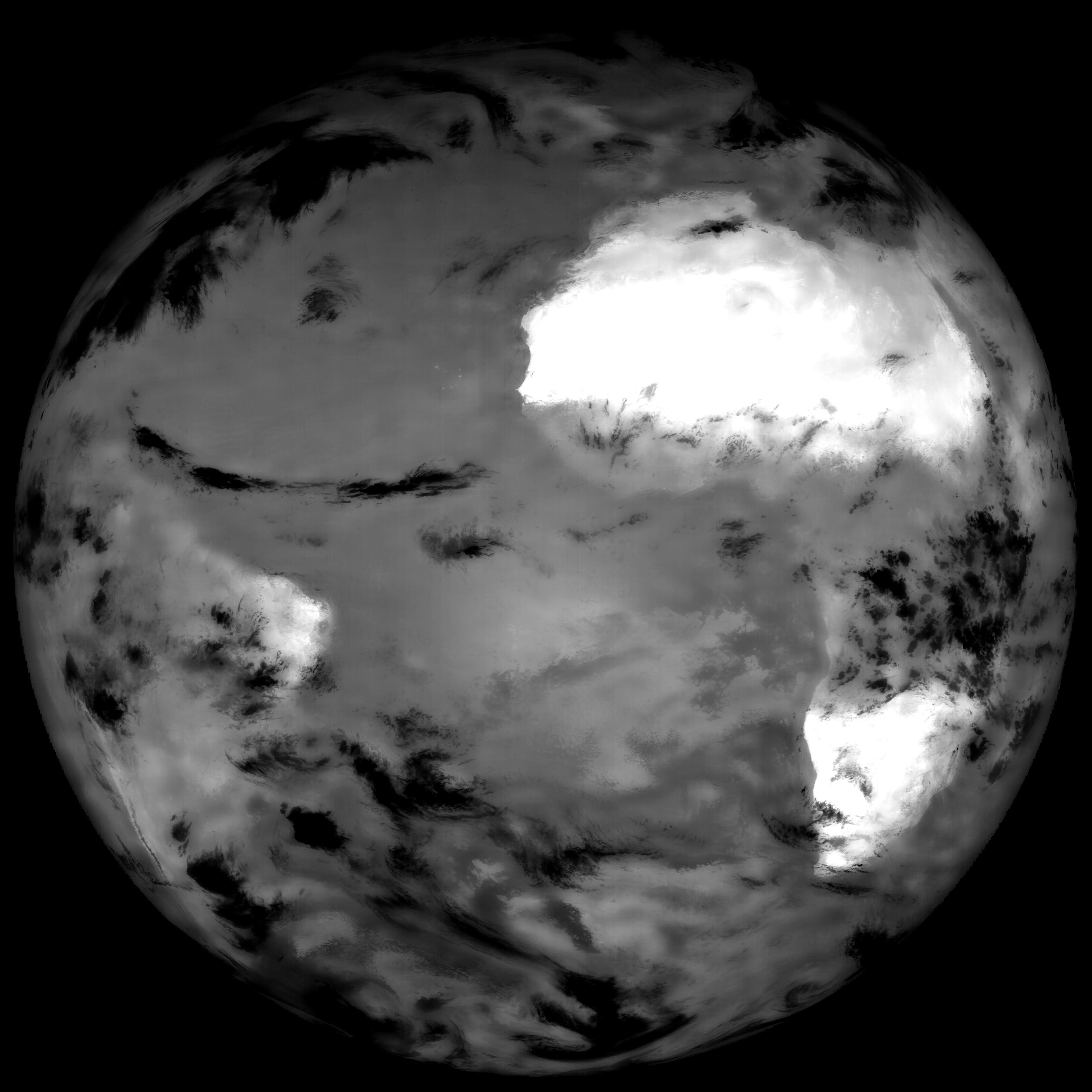
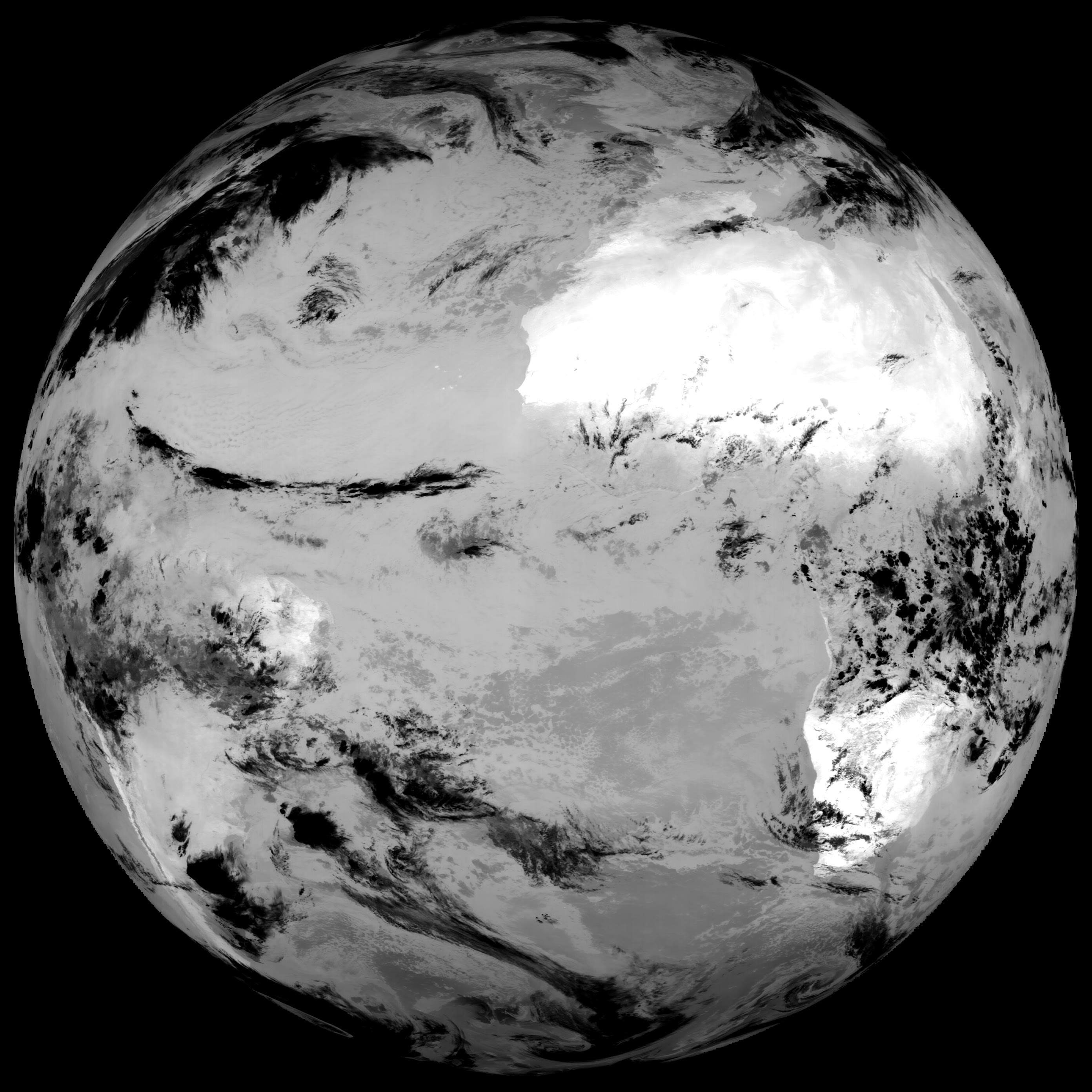
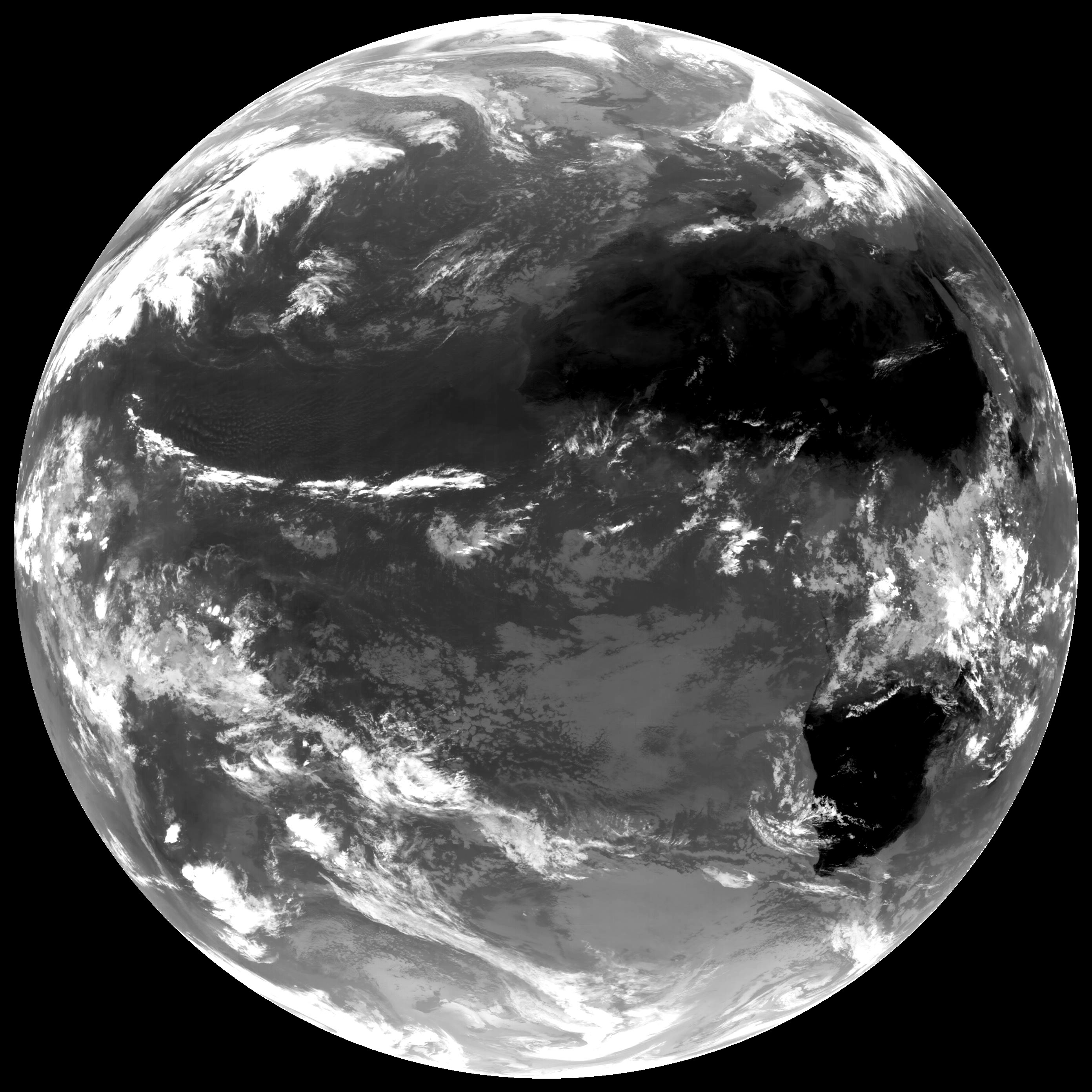
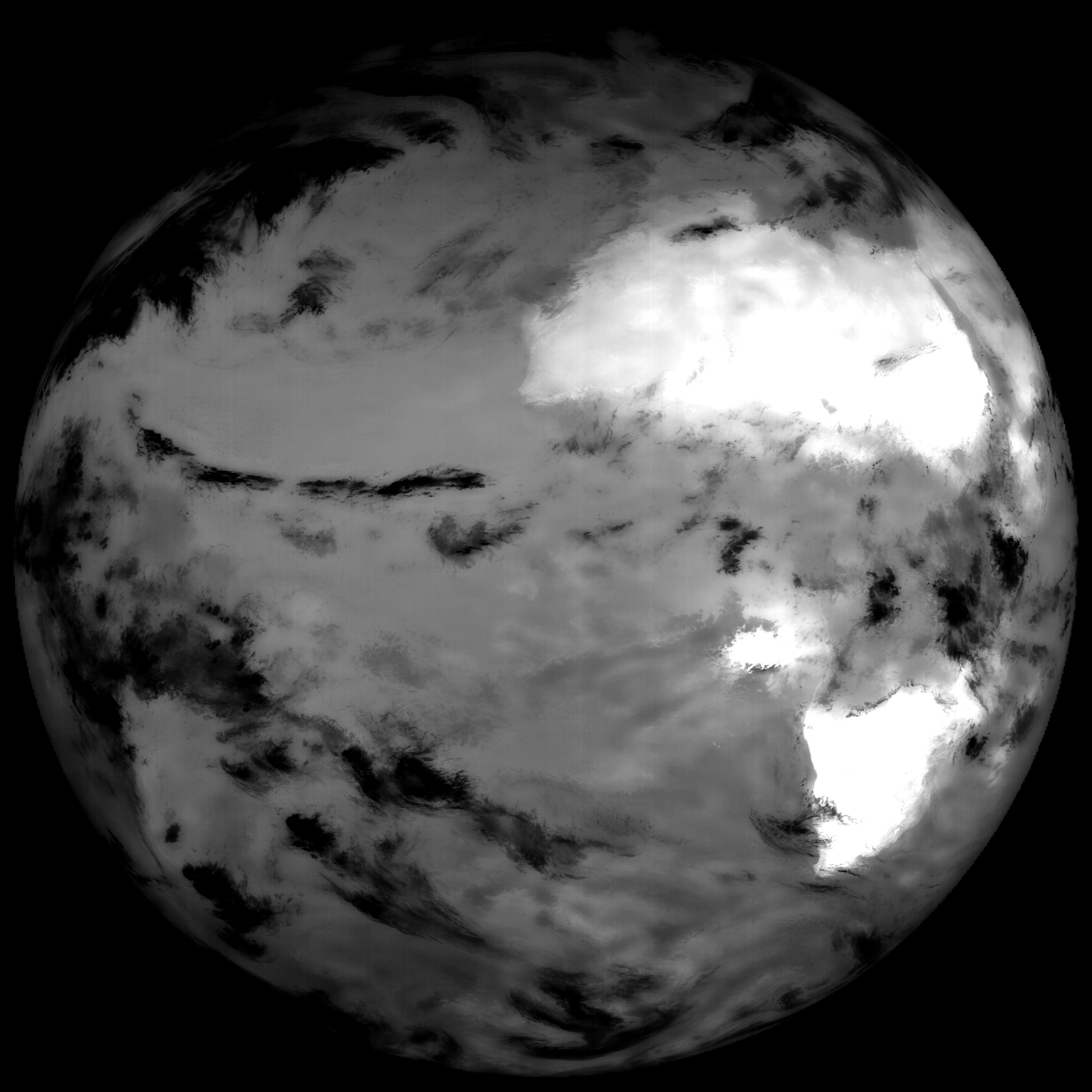
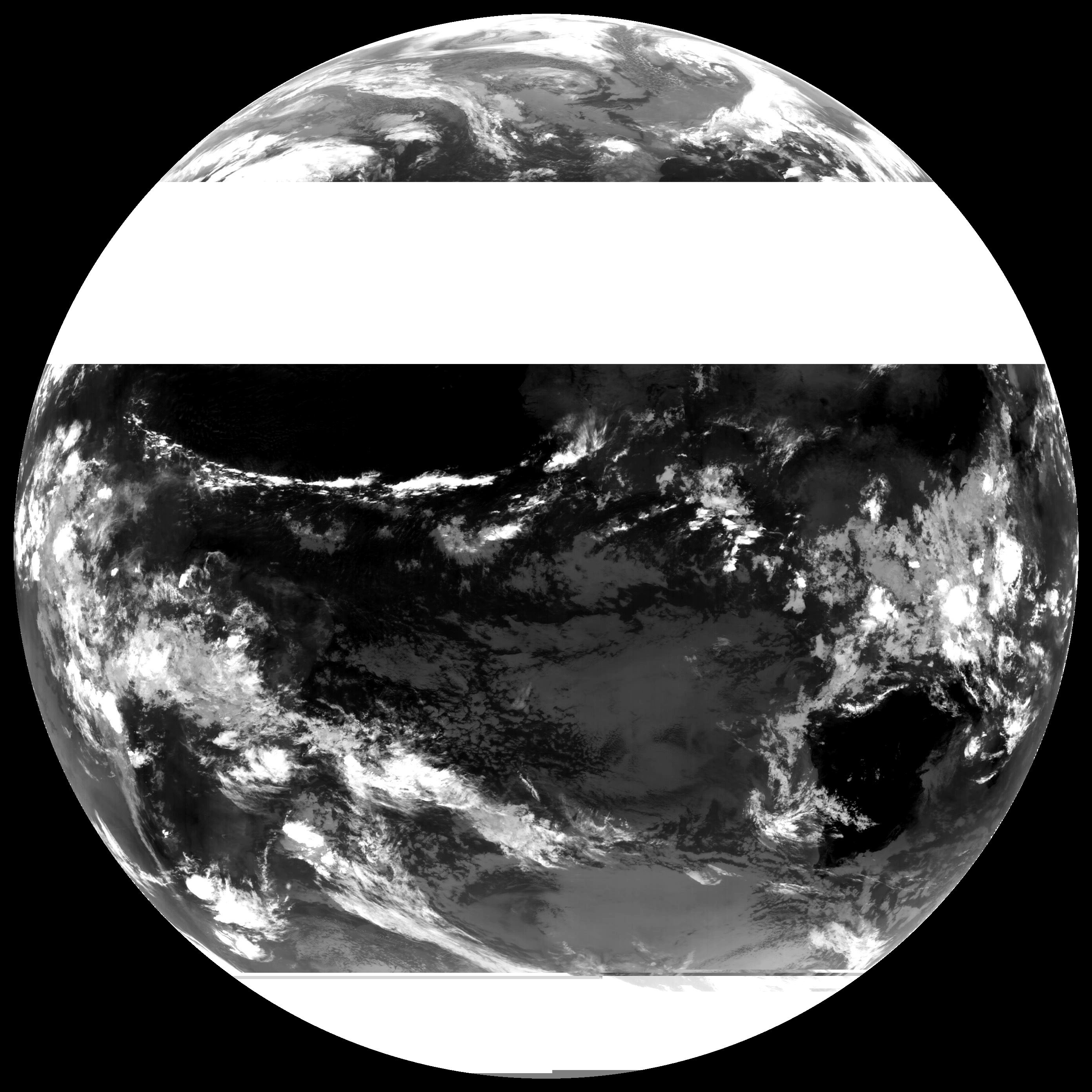
One row per transmission, newest first; each row holds every product of that scan. Every product SatDump produced is shown; products built from a channel with missing or corrupted segments are marked damaged and name the affected segments. Visible-light products are left out at night. New images appear a few minutes after the transmission ends. Click an image for the full 2784 × 2784 pixel original. Times are scan times in UTC.
Station status loading…

| Scan (UTC) | Natural | 10.8 µm | MSU-GS 321 | AVHRR 221 | Map | 0.6 µm | 0.7 µm | 0.9 µm | 3.8 µm | 10.7 µm |
|---|---|---|---|---|---|---|---|---|---|---|
| 13 Nov 21:30 30/30 |
|
 |
 |
 |
 |
 |
 |
 |
 |
 |
| 13 Nov 18:30 30/30 |
 |
 |
 |
 |
 |
 |
 |
 |
 |
 |
| 13 Nov 15:30 7/30 |
 |
– |  |
 |
 |
 |
 |
 |
 |
– |
| 13 Nov 12:30 29/30 |
 |
 |
 |
 |
 |
 |
 |
 |
 |
 |
| 13 Nov 09:30 30/30 |
 |
 |
 |
 |
 |
 |
 |
 |
 |
 |
| 13 Nov 06:30 22/30 |
 |
 |
 |
 |
 |
 |
 |
 |
 |
 |
Rows: transmissions of the last 24 hours, newest first; the number under the time is image segments received clean, of 30. Images marked “damaged” are shown as received: segments with bit errors appear as shifted or wrongly coloured bands (details in the image title). “–”: not received, or a visible-light product at night.
Images are published automatically a few minutes after each transmission, including transmissions with reception errors. Click any image for the full 2784 × 2784 pixel resolution. Elektro-L No.3 data: Roscosmos / SRC Planeta. Received and processed by DC8PAT with SatDump.
Station
| Component | Details |
|---|---|
| Antenna | Offset dish, reflector 97 × 87 cm, effective aperture ≈0.85 m, ≈21 dBi, beamwidth ≈14° at 1691 MHz |
| Pointing | Azimuth 213.5° true, elevation 29.3° (fixed, no rotator) |
| Feed | 3-turn helix, LHCP (L-Band WX HRPT feed), in the LNB holder with a printed adapter, phase centre 20 mm behind the standard LNB position |
| LNA | SAW-filtered LNA for the 1.7 GHz band at the feed, powered via bias-T |
| Receiver | Nooelec NESDR SMArTee (RTL-SDR, TCXO), 1691.0 MHz, 2.4 MS/s, gain 49.6 dB |
| Computer | Raspberry Pi 4 |
| Software | SatDump 1.2.2 (elektro_lrit pipeline), OpenWebRX (public waterfall) |
| Monitoring | Band level and transmission results to InfluxDB, shown in Grafana (live panel above) |
Downlink
| Parameter | Value |
|---|---|
| Satellite | Elektro-L No.3, geostationary, 14.5° W |
| Frequency / polarisation | 1691.0 MHz, RHCP (feed at the dish focus is LHCP: the reflector reverses the sense) |
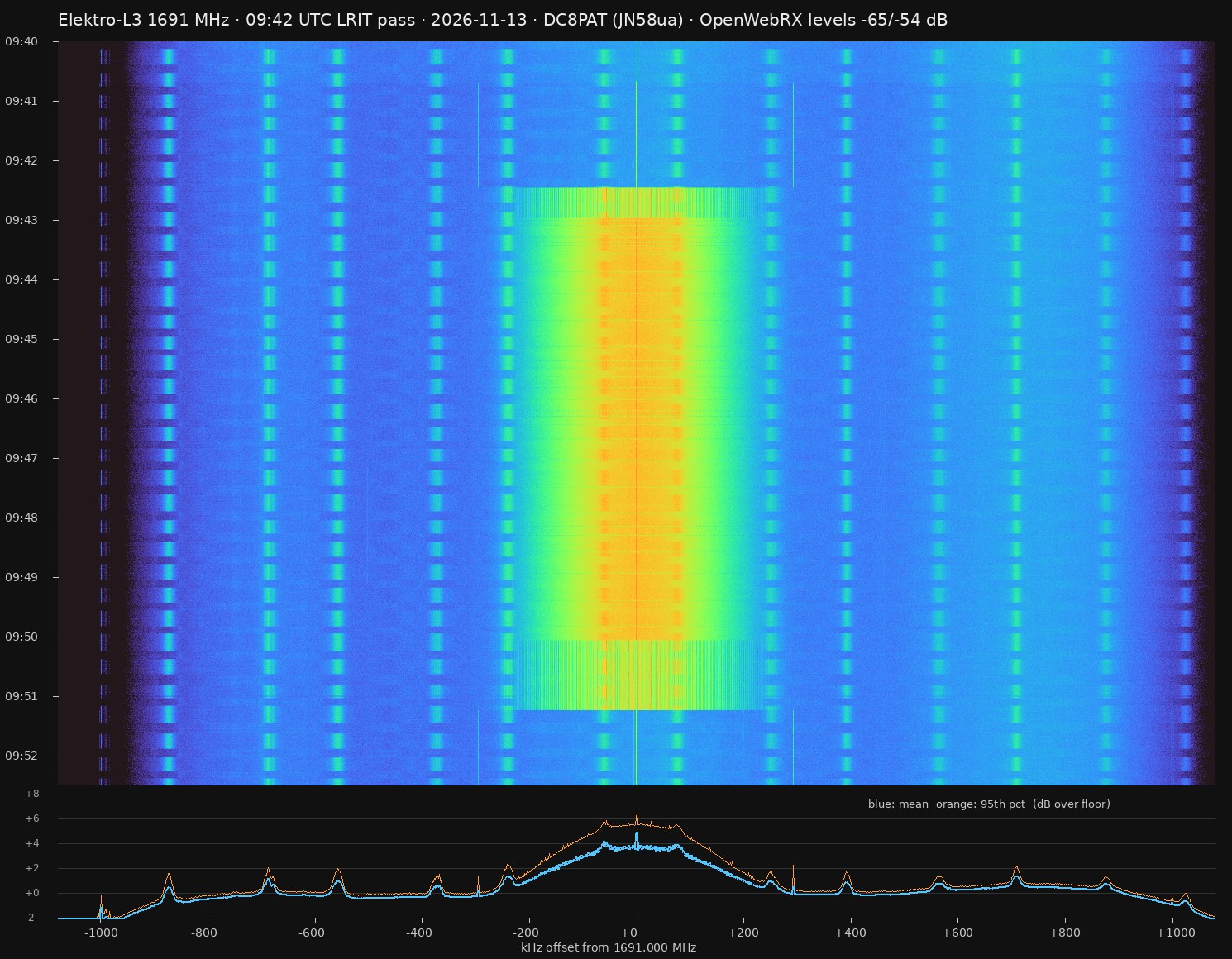
| Occupied bandwidth | ≈±230 kHz |
| Transmission schedule (UTC) | Every 3 h from 00:42 (00:42, 03:42 … 21:42), carrying the xx:30 scan; 5–10 min each. Night transmissions start within 1–4 s of xx:42:00, day transmissions (09:42, 12:42, 15:42) 20–60 s later |
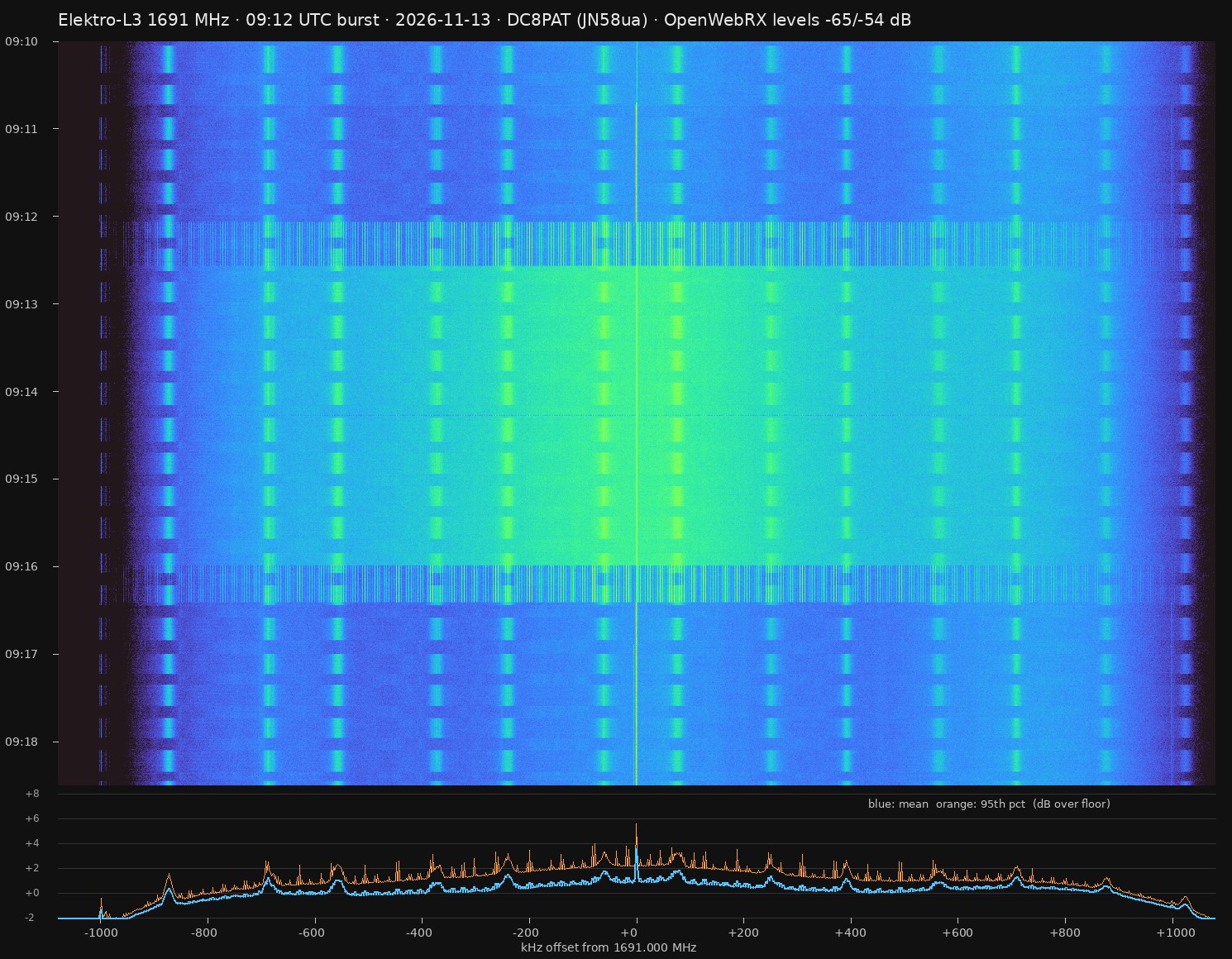
| Precursor | Transmission at xx:12 UTC (start within 1–5 s), ≈4 min, wider than LRIT, not decoded (used as pointing beacon) |
| Channels | 0.6, 0.7, 0.9 µm (visible/near IR, daylight); 3.8, 10.7 µm (IR, day and night) |
| Image | Full disk, 2784 × 2784 px per channel, 4.0 km/px at the sub-satellite point |
| Segments | 6 per channel, 30 per transmission; order 3.8, 10.7, 0.9, 0.7, 0.6 µm |
Performance
| Measurement | Value |
|---|---|
| Band level between transmissions | 0.6–0.8 dB |
| Band level during a transmission (since final pointing, 13.11.2026) | 4.75 dB median |
| Level for an error-free decode | ≥4.4 dB steady |
| Precursor at xx:12 | ≈1.5 dB |

Operating notes
- LRIT is not continuous: the satellite sends eight transmissions a day. Pointing and tests only make sense during a transmission or the xx:12 precursor.
- Any movement of the dish during a transmission damages the segments received in that time.
- SatDump 1.2.2 writes a channel only when all six segments are in and does not separate scans; it is restarted after each transmission.
- A short buffer in the sample splitter silently drops samples when a client falls behind; this looks like a weak signal. nmux runs with a 7 s buffer.
- Several RTL-SDRs on one USB hub dropped out repeatedly; the SDR is on a Pi USB port directly.
- A dead LNA looks like bad pointing. Check: switching the bias-T must raise the noise floor by several dB.
- Damaged transmissions are archived with the decoder log.
Signals at 1691 MHz
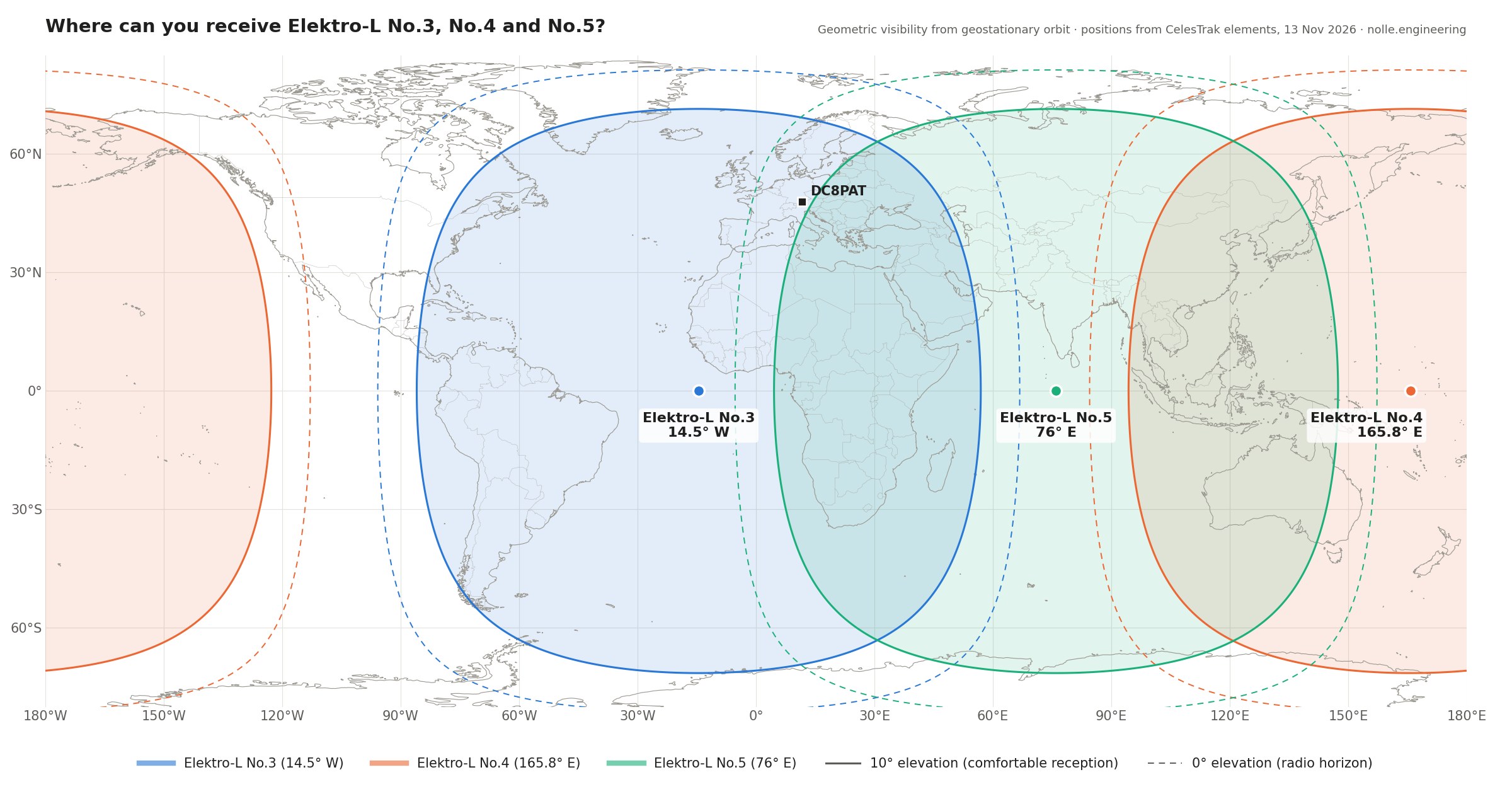
Receiving Elektro-L3, L4 or L5?
If you receive Elektro-L No.3, No.4 or No.5 yourself, please get in touch: info@nolle.engineering. We are interested in your setup (dish, feed, LNA, SDR), signal levels, transmission times you observe and the decoder settings that work for you, and we are happy to share our logs and settings in return. Markus OE3HWC in Austria receives Elektro-L3 with our feed on a 1 m dish (see his first L-band images from OE3HWC in Austria).
Build your own
The feed on this station is our L-Band WX HRPT feed. For other dishes or frequencies, ask us.
-
 SMA Adapter8,46 € (ohne MWSt. 7,11 €)
inkl. MwSt.
zzgl. Versandkosten
Lieferzeit / Delivery time: 3–12 Werktage / working days
-
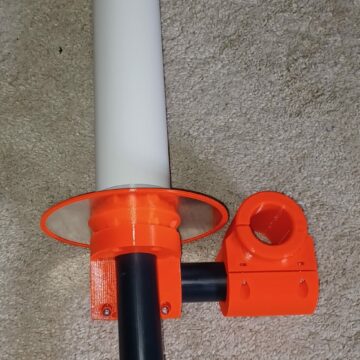 L-Band Inmarsat Bundle 1525 MHz (10-turn + accessories)184,94 € (ohne MWSt. 155,41 €)
inkl. MwSt.
zzgl. Versandkosten
Lieferzeit / Delivery time: 3–12 Werktage / working days
-
 Tripod mount adapter23,54 € (ohne MWSt. 19,78 €)
inkl. MwSt.
zzgl. Versandkosten
Lieferzeit / Delivery time: 3–12 Werktage / working days
-
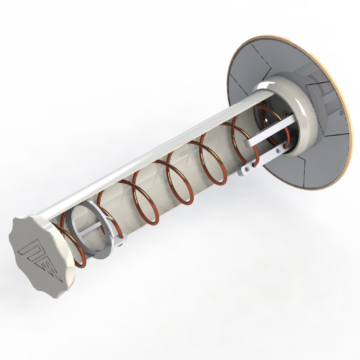 L-Band Inmarsat 1525 MHz114,38 € – 156,20 €
inkl. MwSt.
zzgl. Versandkosten
Lieferzeit / Delivery time: 3–12 Werktage / working days
-
 Electronics Cover13,08 € (ohne MWSt. 10,99 €)
inkl. MwSt.
zzgl. Versandkosten
Lieferzeit / Delivery time: 3–12 Werktage / working days
-
L-Band H1 1420 MHz121,57 € – 151,20 €
inkl. MwSt.
zzgl. Versandkosten
Lieferzeit / Delivery time: 3–12 Werktage / working days
-
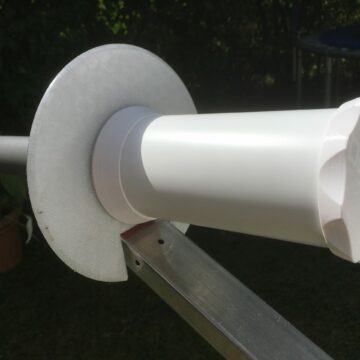 L-Band WX HRPT 1700 MHz114,38 € – 136,56 €
inkl. MwSt.
zzgl. Versandkosten
Lieferzeit / Delivery time: 3–12 Werktage / working days
-
 Radiation Pattern Measurement Add-On196,17 € (ohne MWSt. 164,85 €)
inkl. MwSt.
-
 Elevation clamp23,54 € (ohne MWSt. 19,78 €)
inkl. MwSt.
zzgl. Versandkosten
Lieferzeit / Delivery time: 3–12 Werktage / working days
-
L-Band GPS L1 1575 MHz194,03 € – 209,04 €
inkl. MwSt.
zzgl. Versandkosten
Lieferzeit / Delivery time: 3–12 Werktage / working days
-
 Cross clamp27,47 € (ohne MWSt. 23,08 €)
inkl. MwSt.
zzgl. Versandkosten
Lieferzeit / Delivery time: 3–12 Werktage / working days
-
L-Band GPS L2/L5 1200 MHz194,03 € – 209,04 €
inkl. MwSt.
zzgl. Versandkosten
Lieferzeit / Delivery time: 3–12 Werktage / working days


Disclaimer
The data provided on this website is intended for use by amateur radio operators. This service is provided free of charge for educational and non-commercial purposes.
By accessing and using this website, you agree to the following terms:
- Compliance with Laws: Users must comply with all applicable laws and regulations in their respective jurisdictions. It is the user’s responsibility to ensure that their use of the data does not violate any local, state, national, or international laws.
- Non-Commercial Use: The data and services provided on this website are strictly for non-commercial use. Unauthorized commercial use of the data is prohibited.
- Accuracy and Reliability: While we strive to ensure the accuracy and reliability of the data, we do not guarantee its accuracy, completeness, or reliability. The data is provided “as is” without any warranties of any kind, either express or implied.
- Security: Users are responsible for maintaining the security of their devices and internet connections. We are not responsible for any loss or damage resulting from unauthorized access to your data or devices.
- Intellectual Property: Users must respect all intellectual property rights associated with the data. Unauthorized use, reproduction, or distribution of the data may violate applicable laws and regulations.
- Limitation of Liability: We shall not be liable for any direct, indirect, incidental, special, or consequential damages arising out of or in connection with the use of this website or the data provided, including but not limited to damages for loss of profits, goodwill, use, data, or other intangible losses.
- Changes to Disclaimer: We reserve the right to update or modify this disclaimer at any time without prior notice. Your continued use of the website following any changes constitutes your acceptance of the new terms.
By using this website, you acknowledge that you have read, understood, and agree to be bound by this disclaimer.