
Description
What it does
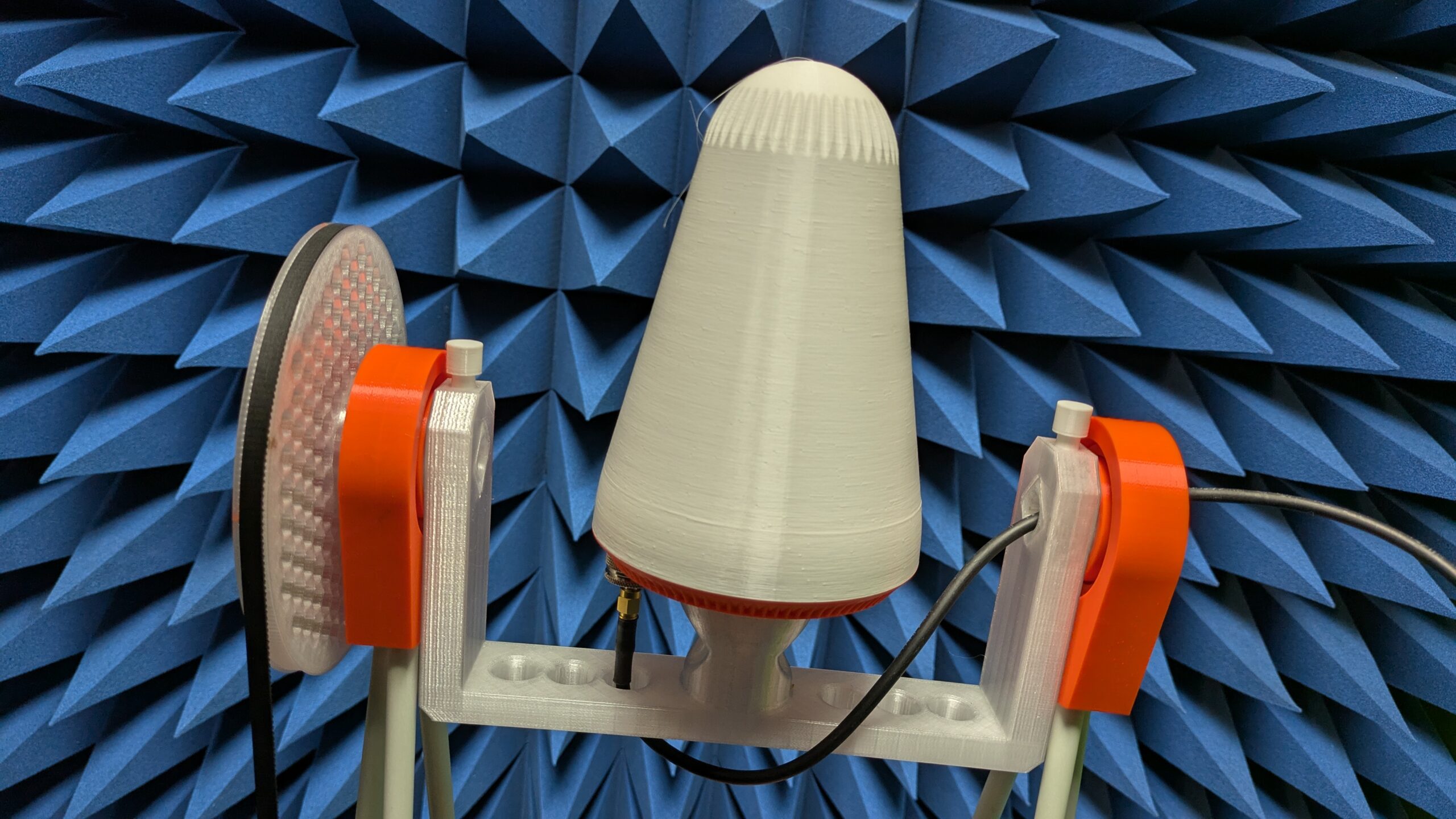
The IceConeFeed Customized is a built-to-order variant of the IceConeFeed v2.1. We retune the helix and adjust the turn count to match your application — useful when the standard 2.4 GHz QO100 narrowband configuration does not fit, for example for S-band downlink experiments, drone-borne transmitter mock-ups, indoor-navigation testbeds, or wide-band amateur work outside the QO100 band.
Each unit is hand-built and tuned to your specified parameters. Typical lead time is two to three weeks from order placement.
Specifications
| Parameter | Value |
|---|---|
| Center frequency | Customer-specified, 2200 MHz – 2500 MHz |
| Helix turns | Customer-specified, 2 – 3.5 |
| Polarization | LHCP (default) — RHCP available on request |
| SWR @ tuned frequency | < 1.2 |
| Connector | N-type (default) — SMA on request |
| Material | PETG, UV-resistant |
| Color | Orange/White (default), Custom on request |
| Assembly | Fully assembled and tuned at our facility |
How to order
After purchase we will get in touch to confirm the exact center frequency (between 2200 MHz and 2500 MHz) and helix turn count (between 2 and 3.5 turns). Once these are agreed we build, tune, and measure the unit before shipping.
Quality control & test campaign
Every unit is tuned to spec before it ships. The acceptance step is an S11 / SWR measurement at the customer-specified center frequency — units only leave the bench once they meet the published tolerance.
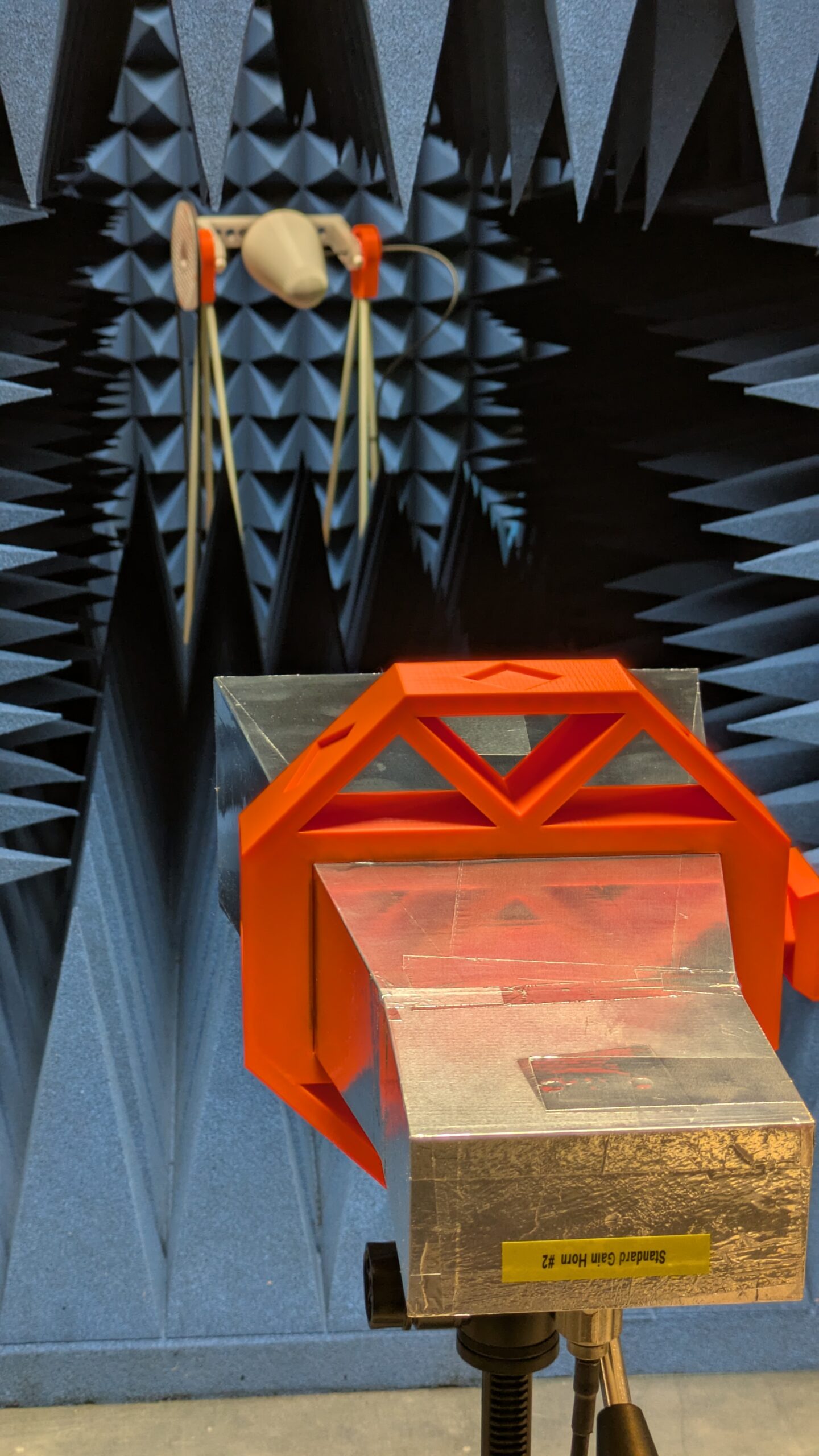
For research-grade applications you can pick the Full radiation pattern measurement variant on this page: the unit is run through our Antenna Test Facility before shipping and arrives with a measurement report covering the full 3D radiation pattern, gain, axial ratio, half-power beamwidth, and an S21 sweep across the band. Same measurement campaign as the standalone Radiation Pattern Measurement Add-On, just bundled with the unit.
Reference project
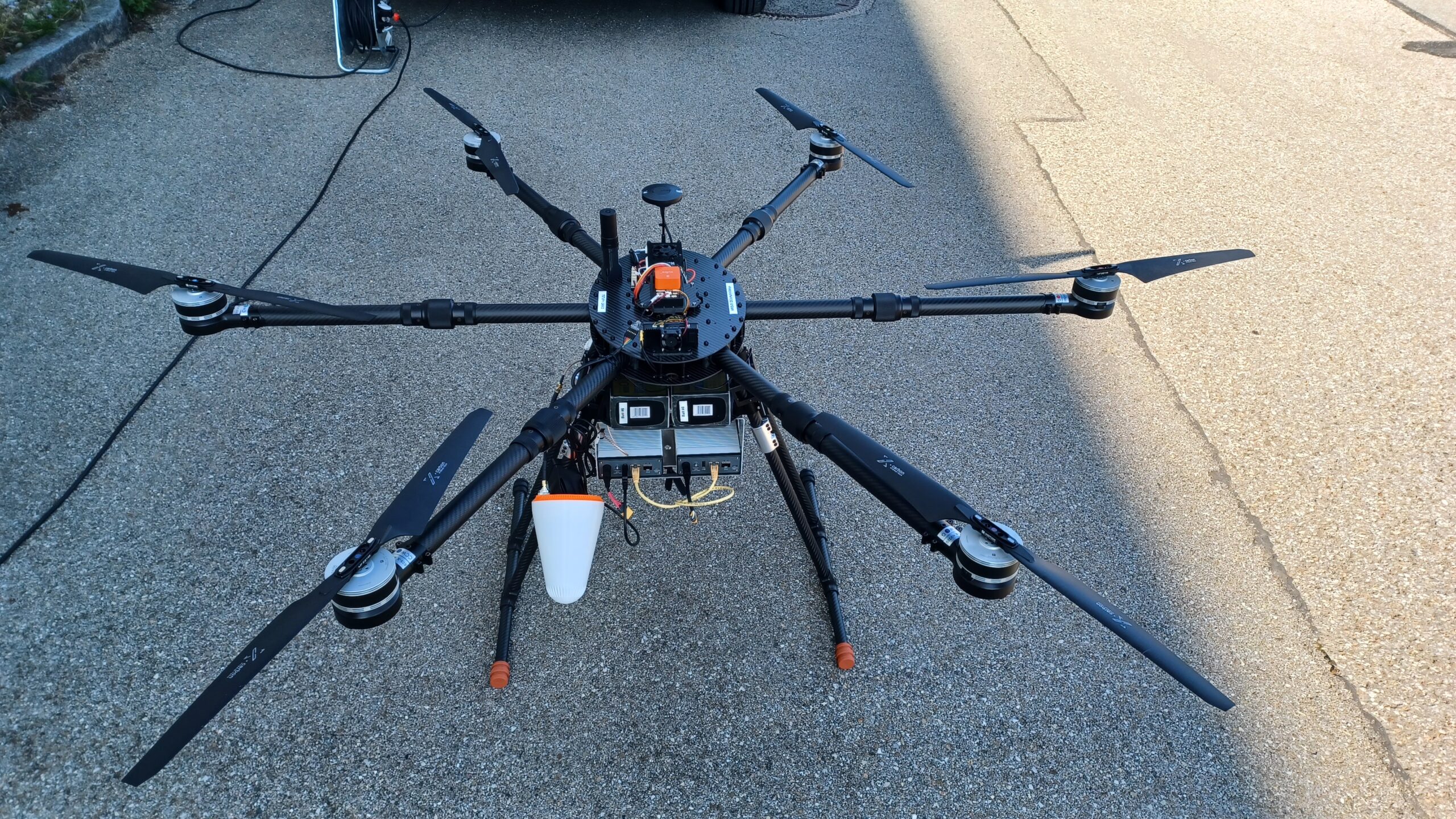
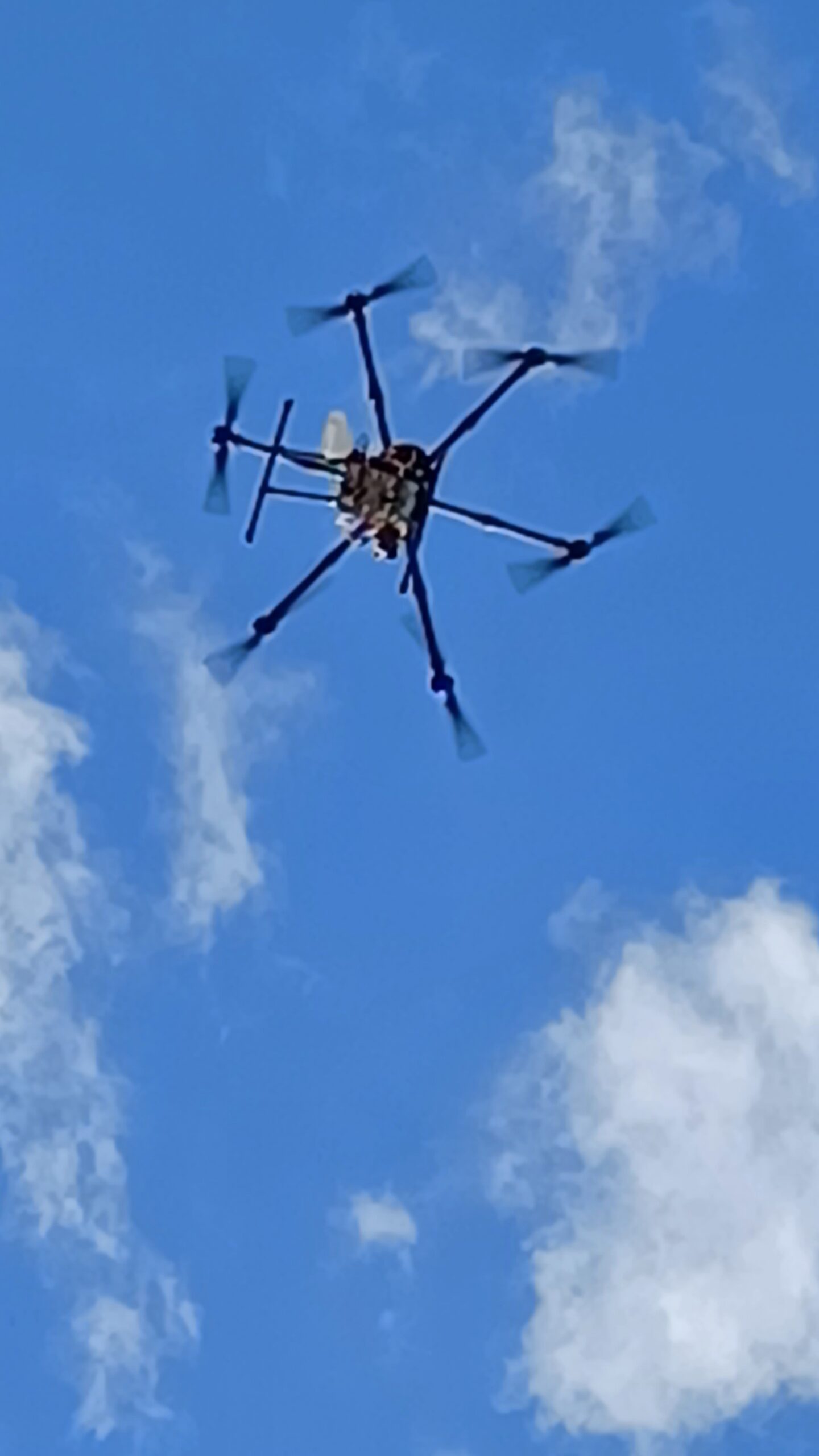
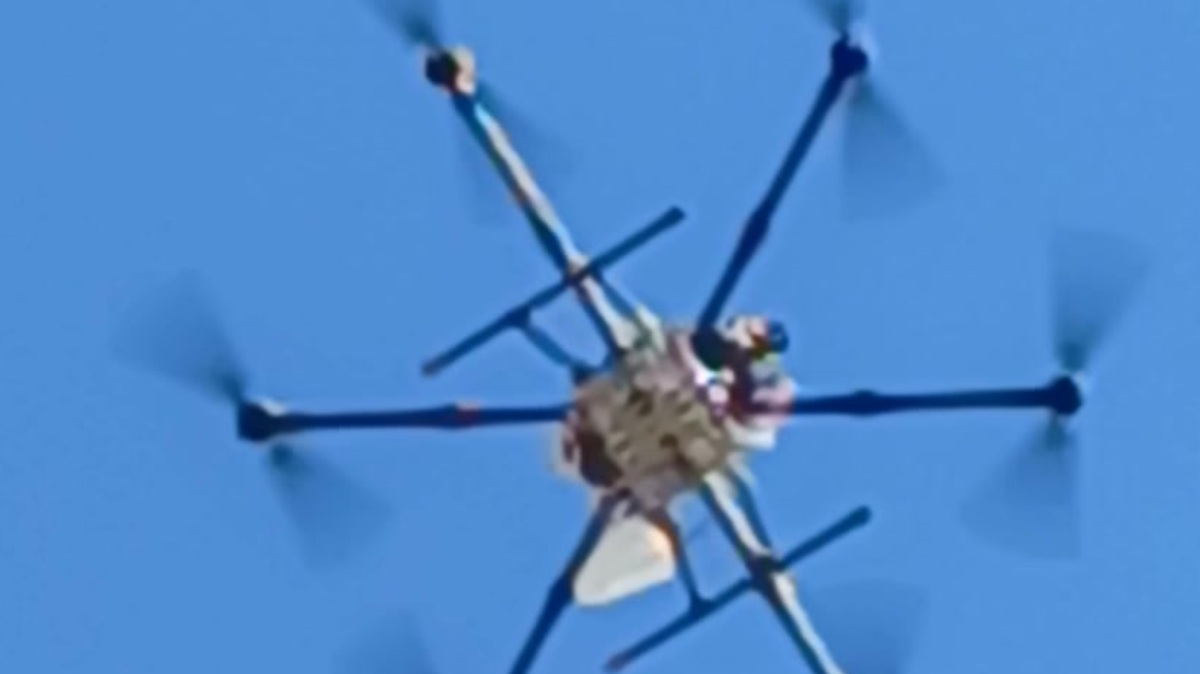
For an example of a customised IceConeFeed in the field, see the Lab post “Drone as Satellite: Custom S-Band IceConeFeed for ESA Indoor Navigation Research” — a 2.49 GHz variant flown under an industrial hexacopter to simulate a low-orbit satellite for an ESA-funded indoor navigation testbed.
Typical use cases
- S-band research telemetry, LEO emulation, indoor navigation testbeds
- Drone-borne transmitter mock-ups
- Wide-band amateur experiments outside QO100 narrowband
- Educational projects that need a specific center frequency
Which LNB adapter do you need? See our LNB adapter ring selection guide — how to measure your LNB and choose the right ring (or confirm you need none).


