
On 26 October 2026 the Russian geostationary weather satellite Elektro-L No.3 switched on its L-band image downlink from its new position at 14.5° W. Two days later Markus Schieder, OE3HWC, sent us his first full-disk images, received in Wiener Neustadt, Austria, with a 100 cm offset dish and our 3-turn L-Band WX HRPT 1700 MHz feed.
Images and station photos by Markus Schieder, OE3HWC, reproduced with his permission.
Update 7 November 2026: Markus now runs his own Elektro-L3 page at oe3hwc.space. Every image his station receives appears there automatically after the session and stays in the archive for 30 days, together with a description of his equipment.
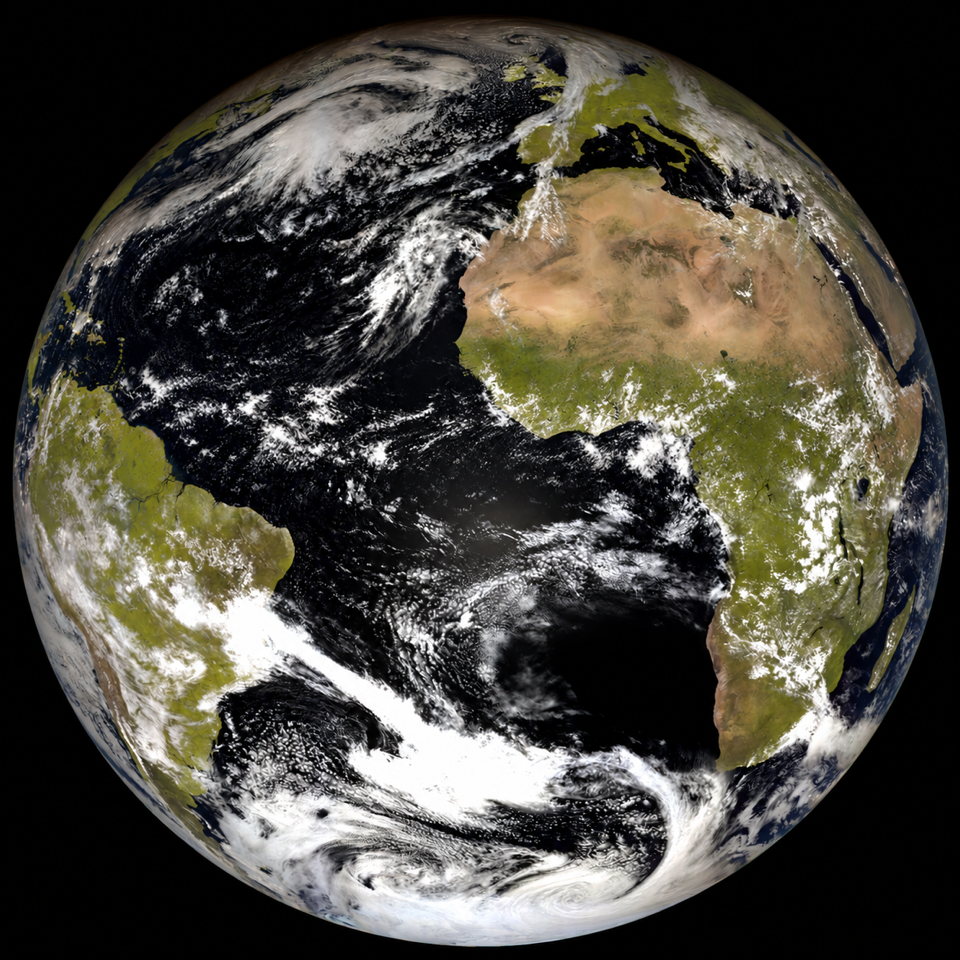
Elektro-L3 at 14.5° W
Elektro-L satellites transmit full-disk images of the Earth on 1691 MHz as LRIT and HRIT, unencrypted and right-hand circularly polarised. Europe has had no usable source from this slot for years: Elektro-L No.2 sits at 14.5° W but never ran its LRIT/HRIT service there because of power-supply problems. After Elektro-L No.5, launched in February 2026, took over the eastern slot at 76° E, No.3 left 76° E in September, reached 14.5° W in mid-October and started LRIT, HRIT and DCP transmissions on 26 October. Roscosmos has published little about the move; the timeline comes mostly from amateur tracking and reception reports.
From 14.5° W the satellite covers Europe, Africa and the Atlantic. Seen from Central Europe it stands at roughly 28–30° elevation towards the south-west: about 28° from Wiener Neustadt, 29° from Munich, 30° from London, higher from southern Europe. It is geostationary, so the dish is aligned once and needs no rotator.
Transmission schedule
Elektro-L3 does not transmit LRIT continuously. It sends eight LRIT sessions a day, every three hours:
| UTC | CET (UTC+1) |
|---|---|
| 00:42 | 01:42 |
| 03:42 | 04:42 |
| 06:42 | 07:42 |
| 09:42 | 10:42 |
| 12:42 | 13:42 |
| 15:42 | 16:42 |
| 18:42 | 19:42 |
| 21:42 | 22:42 |
The times come from reception observations compiled by António Pereira (as of 27 October 2026) and from Markus’s station, which runs around the clock; his archive also shows the 00:42 UTC session, which the early lists missed. HRIT times are not confirmed yet. Roscosmos has not published a schedule, so it may change. Align and test your dish during a session: between sessions there is no carrier to find.
The OE3HWC station
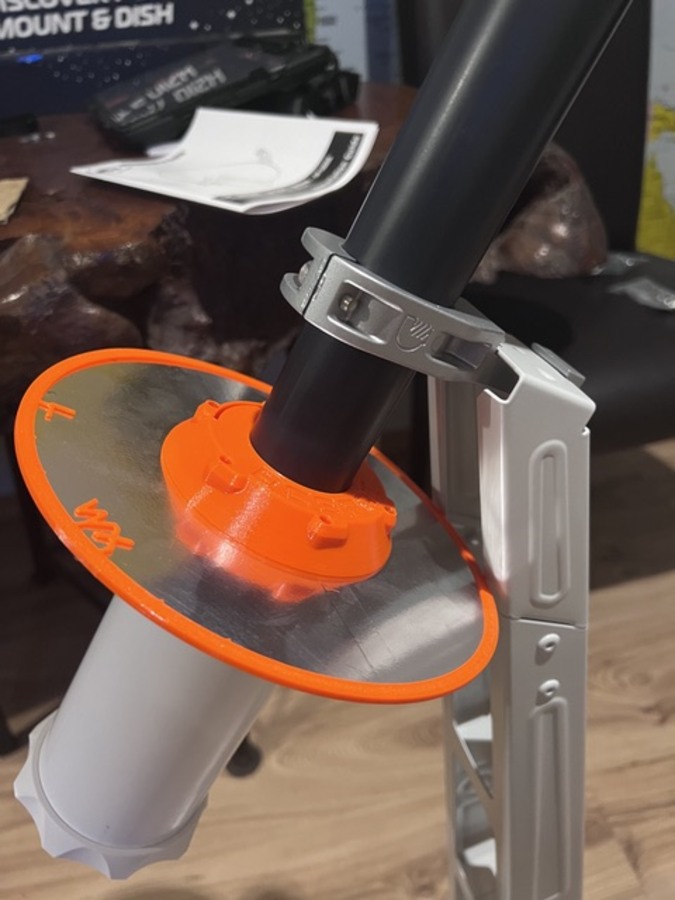
Markus uses our 3-turn WX HRPT feed in LHCP. A dish reverses the sense of circular polarisation, so a feed at the focus has to be LHCP to receive an RHCP satellite. The LNA, a Nooelec SAWbird GEOS, and the SDR, a Nooelec NESDR SMArTee, sit directly on the feed’s N connector inside our Electronics Cover, so there is no cable loss in front of the LNA. A Raspberry Pi 4 in a weatherproof box at the dish passes the samples over 7.5 m of network cable to the shack, where SatDump decodes the images.

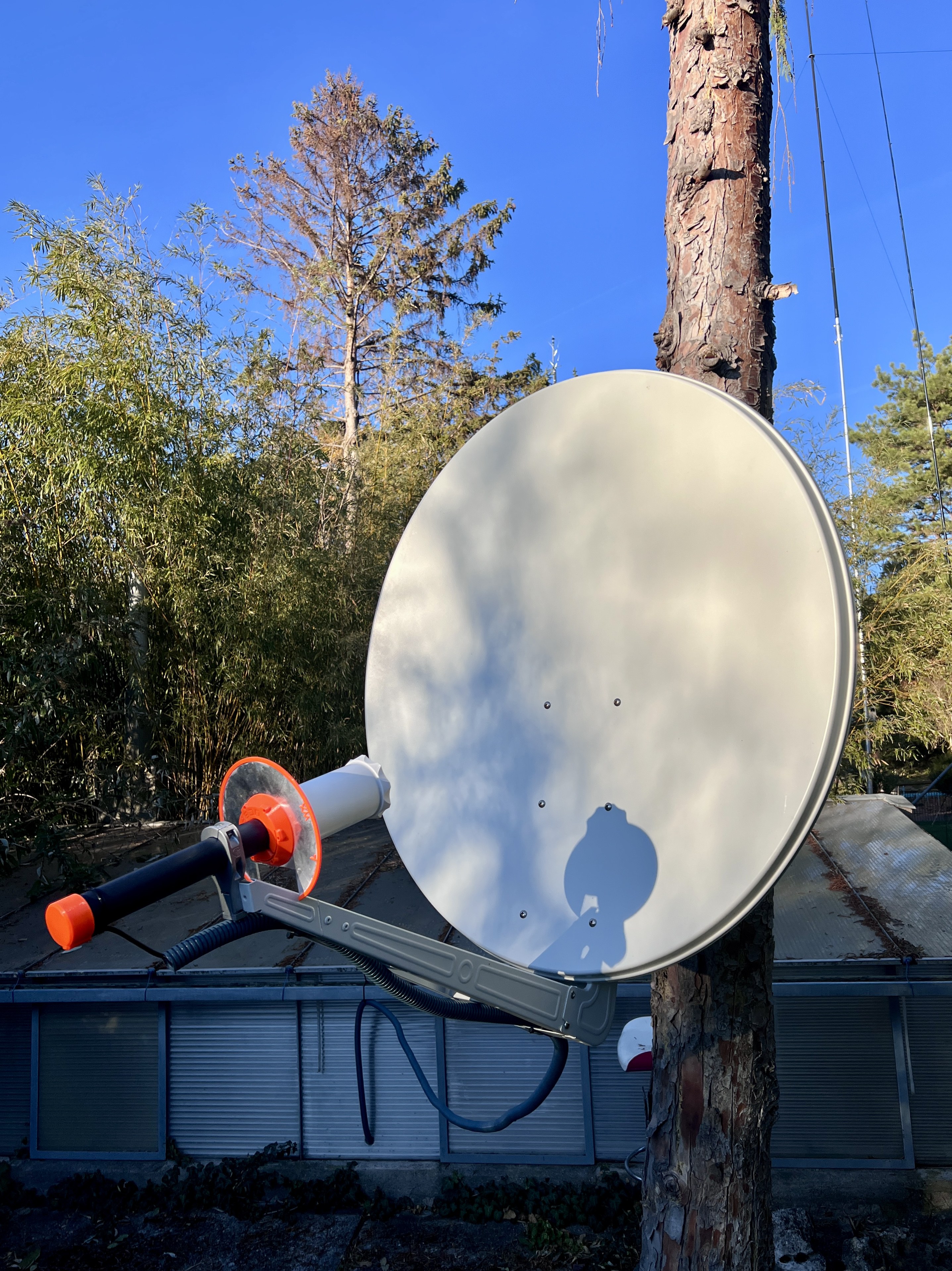
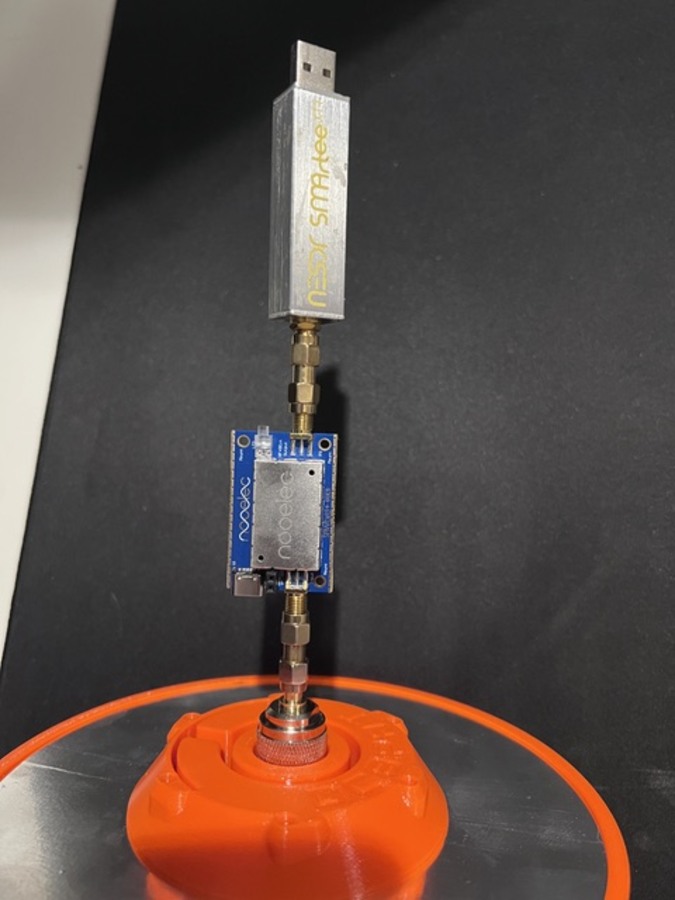
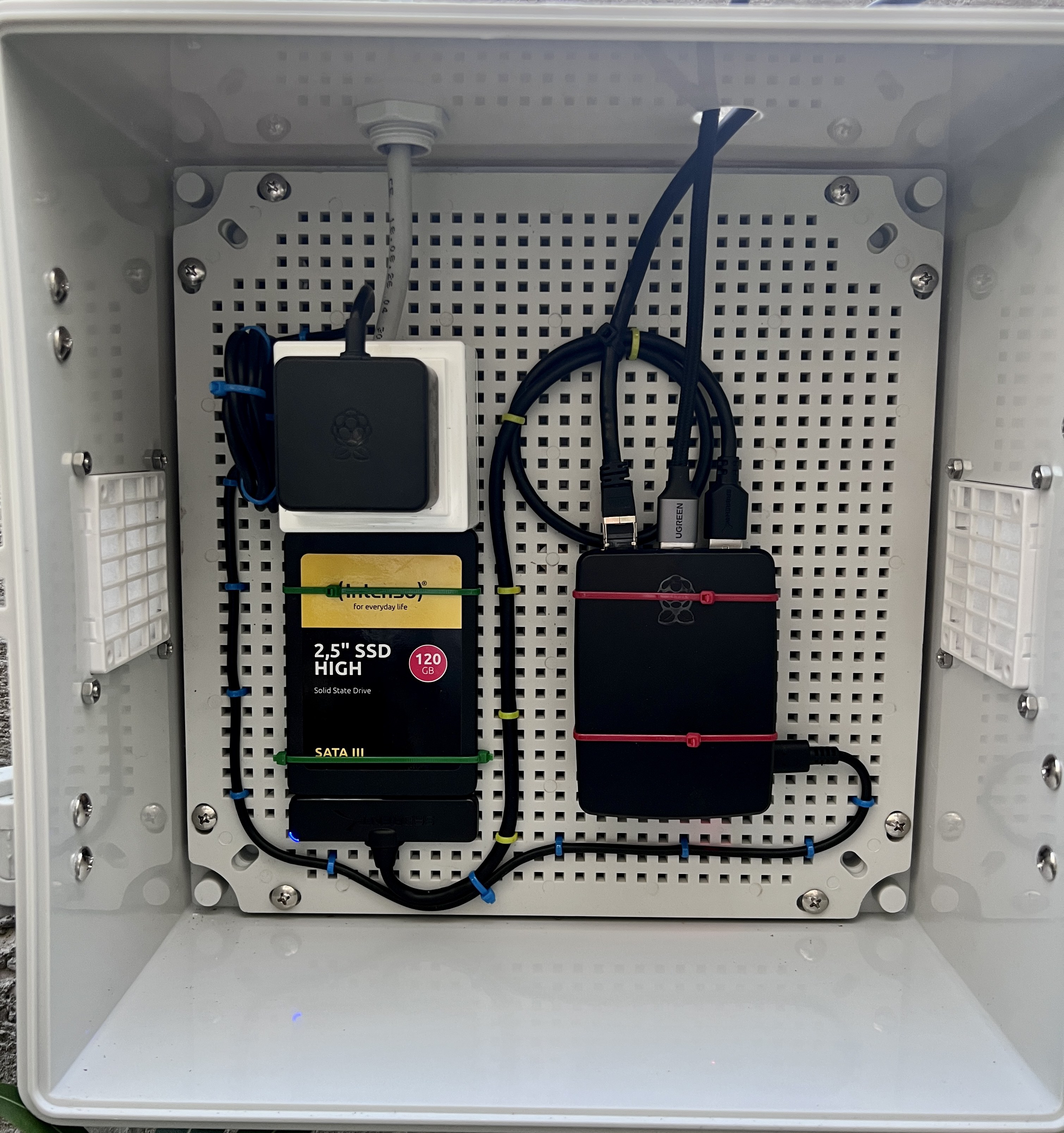

The feed sits in the dish’s LNB arm clamp. On many offset arms the clamp is close to the arm, and the feed reflector hits the arm before the feed is back far enough. The reflector has three rectangles marked for this case: cut out the one that fits the arm and the feed slides through. The phase centre of the helix is in roughly the lower third of the turns, not at the reflector plate. Put that point at the focus, then move the feed a few centimetres on the signal.

First images
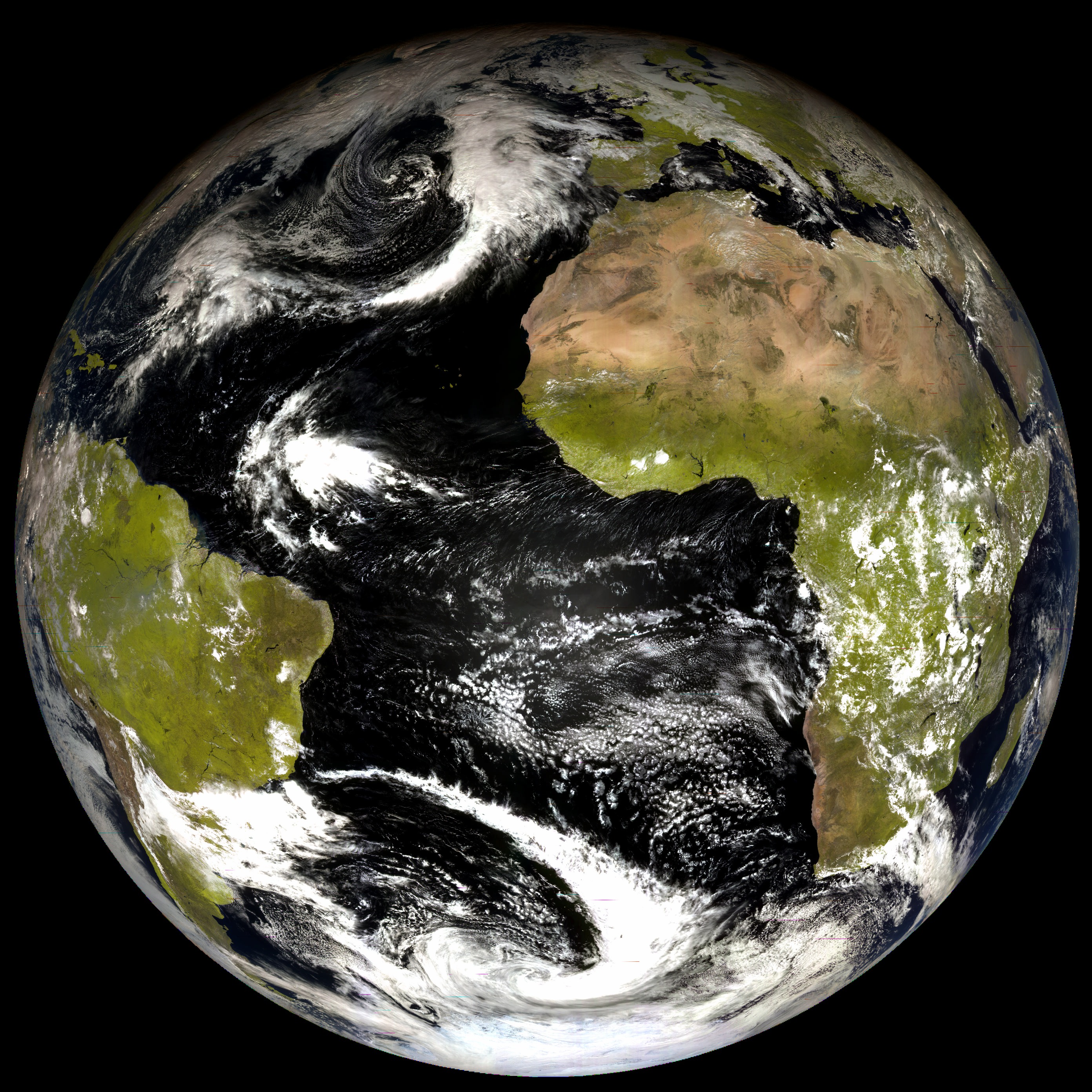
Three sessions from 7 November 2026, received by OE3HWC at full LRIT resolution (2784 × 2784 pixels), plus two composites from the first days. More are on Markus’s page.




What you need to receive Elektro-L3
- A dish. Markus and we use 1 m. Smaller dishes have been reported to work for LRIT; a larger dish gives margin for HRIT and bad weather.
- A 1691 MHz feed, LHCP for dish use: our 3-turn L-Band WX HRPT 1700 MHz feed.
- An LNA with a band filter directly at the feed, for example a SAWbird GEOS.
- An SDR such as an RTL-SDR or NESDR, and SatDump to decode.
- Optionally our Electronics Cover to keep LNA and SDR at the feed and out of the weather.
Thanks to Markus for sharing his station and images. His live images are at oe3hwc.space. If you receive Elektro-L3 with one of our feeds, send us your results.
Update: our station DC8PAT now receives Elektro-L3 around the clock. The Elektro-L3 ground station page shows every image of the last 24 hours and the signal log.